
The world's smallest house stands 0.015 millimeters high, takes up 0.02 millimeters by 0.01 millimeters of space and has walls that are "made of an ultra-thin silica membrane that is just 0.0012 millimeters thick." The incredible project was kickstarted by researchers from the Femto-ST Institute in Besançon, France.
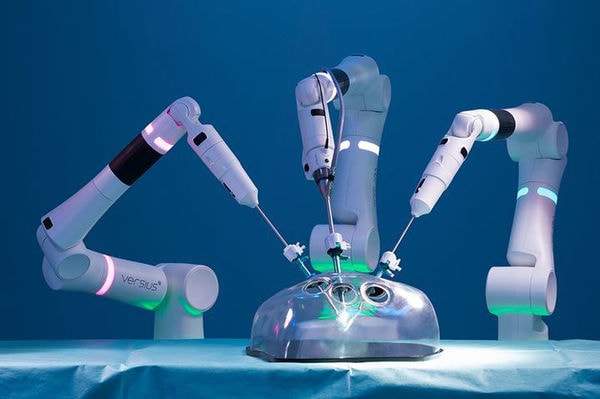
The micro-house was made possible with the help of innovative technology and nano-robots. The assembly of the world's smallest house called for the use of a special technique that featured a "tiny robot, working in a vacuum chamber." An ion beam strategically cut the proportions of the house, which has a standard gabled roof structure, and the membrane was able to self-fold into the desired shape. Thereafter, a less-intense beam was used to weld the parts together.
What Makes This Trend Stand Out
- Nanotechnology
- Disruptive innovation opportunities in nanotechnology include the development of even smaller and more precise construction techniques.
- Micro-scale Robotics
- Disruptive innovation opportunities in micro-scale robotics include the creation of autonomous robots capable of constructing complex structures at a microscopic level.
- Self-folding Materials
- Disruptive innovation opportunities in self-folding materials include the exploration of self-assembling structures and objects for various applications.
Sectors Adopting This
- Construction
- In the construction industry, disruptive innovation opportunities lie in the development of advanced techniques for constructing ultra-tiny and precise structures.
- Nano-manufacturing
- In the nano-manufacturing industry, disruptive innovation opportunities involve the creation of innovative tools and processes for producing nano-scale structures and products.
- Materials Science
- In the materials science industry, disruptive innovation opportunities exist in the exploration of new self-folding materials and their applications in various sectors.