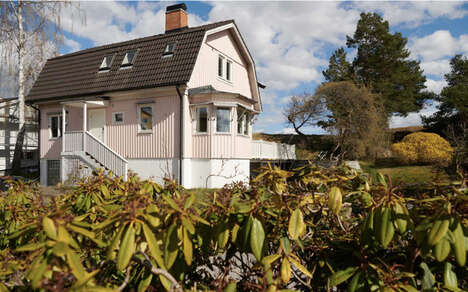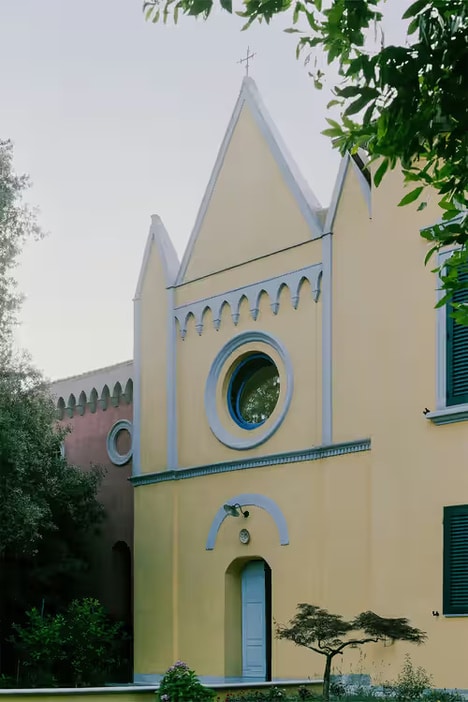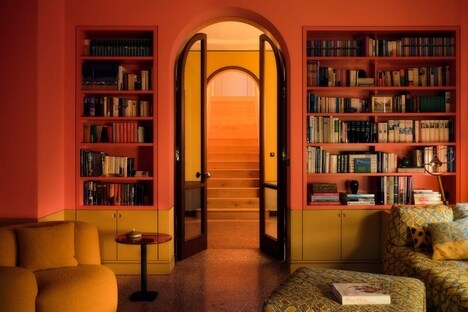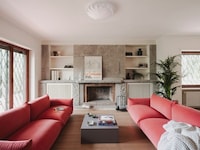

Nestled in the serene landscape of Anzano del Parco in Italy, the Twisted House stands as a transformed villa that once embraced the architectural aesthetics of the late 1960s.
The outside of the house is dressed in a cool teal hue, playing with shapes and spaces across its two levels. The design is simple with just two main colors: a calming green blending with the surroundings and a strong grey giving dimension. Fun pops of acid-yellow at the doors add a quirky touch.
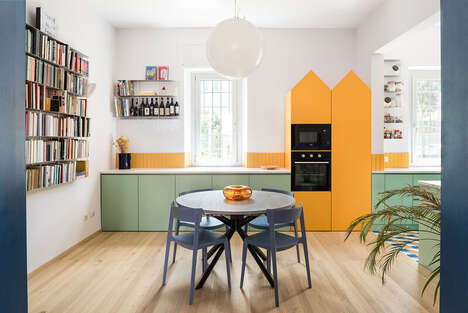
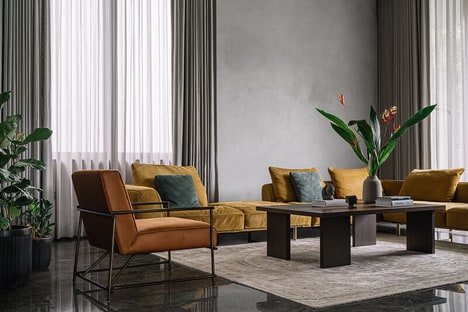
Inside, it's a burst of green and yellow—furniture, doors, and even oak wood floors. With every detail carefully thought out, the Twisted House stands as a testament to Larotonda's artistry and love for modernist design.
Image Credit: Simone Bossi, designboom
Key Themes Behind This Trend
- Transformed Villas
- The Twisted House showcases the trend of transforming old villas into modern homes.
- Mid-century Aesthetics
- The architectural design of the Twisted House embraces the mid-century aesthetics of the 1960s, reflecting a trending desire for retro-inspired designs.
- Quirky Color Accents
- The Twisted House features fun pops of acid-yellow accents, highlighting the trend of incorporating bold and unconventional color choices in interior design.
Where This Applies
- Architecture
- The transformation of old villas into modern homes creates opportunities for architects to showcase their design expertise and revitalize existing structures.
- Interior Design
- The use of mid-century aesthetics and quirky color accents in the Twisted House demonstrates potential for interior designers to create unique and visually striking spaces.
- Home Renovation
- The trend of transforming old villas into modern homes opens up opportunities for the home renovation industry to provide services that cater to preserving architectural history while embracing contemporary design.