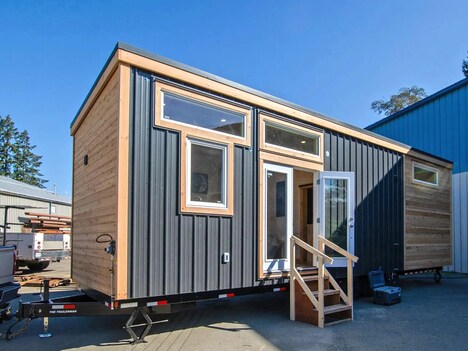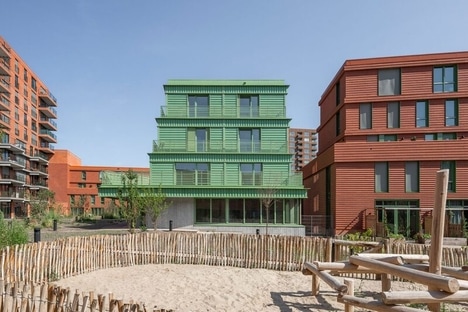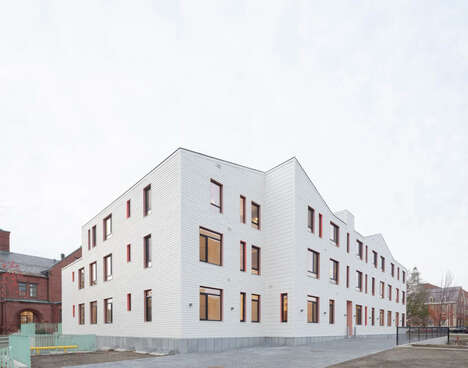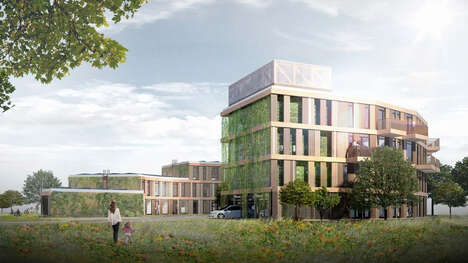
Constructed in Essen, Germany, by B-architecten, the Qville was converted from the former Quarantine stables in a natural and farmland area. The buildings are now transformed into an ecological co-housing project. Some original buildings on the historic site have been rebuilt to preserve the original appearance of the compound.
Forty-four near-zero energy housings are included in this project. The units include one to four-bedroom dwellings and intergenerational homes. Furthermore, the dwellers all have access to common areas such as an indoor swimming pool and a wellness area, and a community center with flex job working areas. Qville also features a roofed terrace and a swimming pond. For sustainable transportation, inhabitants have access to car-sharing and bicycle-sharing locations and solar energy charging stations.
Image Credit: Arch Daily
What's Driving This Trend
- Ecological Co-housing
- New opportunities for constructing and developing ecological and sustainable co-housing compound units
- Near-zero Energy Housing
- Emerging trends for developing near-zero energy housing for sustainable living environments
- Shared Sustainable Living Space
- Growing demand for co-living spaces with shared sustainable amenities and transportation options
Who This Affects Most
- Real Estate and Construction
- Innovative strategies for repurposing existing buildings and creating new eco-friendly dwelling units for sustainable real estate projects
- Renewable Energy
- Opportunities for integrating renewable energy solutions into eco-housing structures for more sustainable and cost-effective living environments
- Community Development
- New approaches and technologies for building sustainable and intergenerational community co-housing projects designed to enrich the lives of its inhabitants