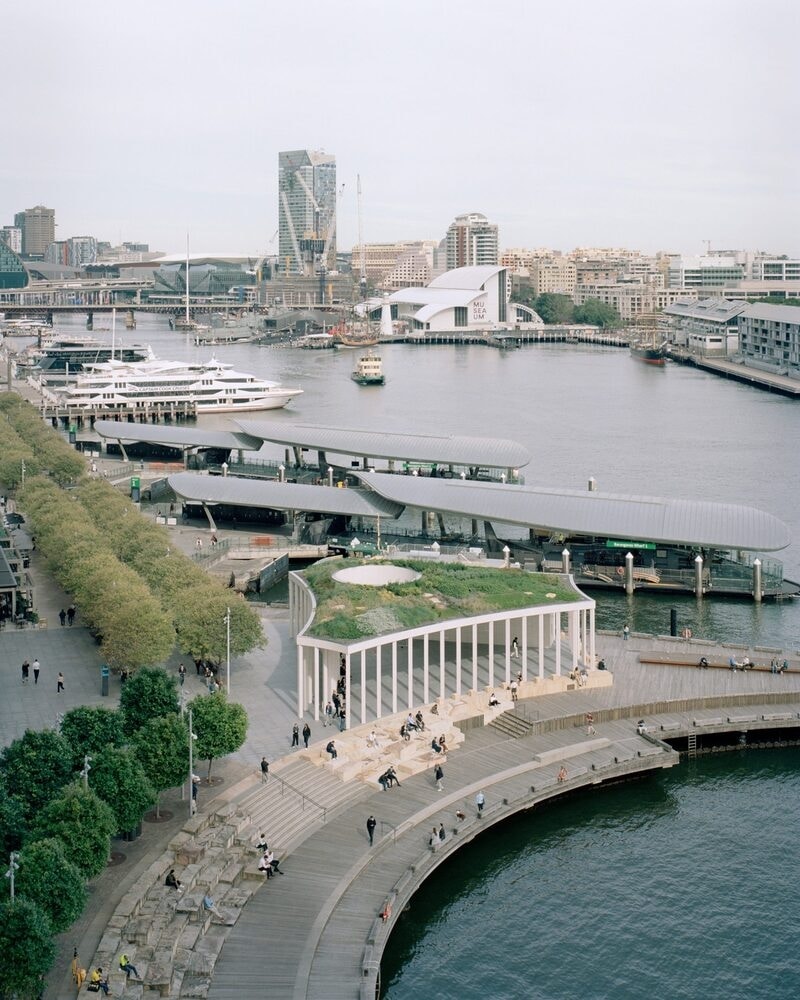
The Pier Pavilion uses recycled oyster shells as a primary façade material by embedding hundreds of thousands of shells into a custom terrazzo mix. The structure is organized around a ring of slender columns that support a broad landscape roof with an oculus positioned to bring daylight into the center of the plan. The shell aggregate provides texture and establishes a direct link to the harbor setting, grounding the pavilion in local environmental history. The arrangement of courtyards and colonnades creates a series of open public spaces suitable for events, circulation and informal gathering.
The landscape roof incorporates planting zones that attract local bird and insect species while offering shaded areas beneath for visitors. Timber decking and consistent material choices tie the upper surfaces to the surrounding waterfront context. The project demonstrates how reclaimed materials can support durable civic architecture while maintaining a restrained form that blends with its site.
Image Credit: Rory Gardiner
What's Driving This Trend
- Reclaimed Material Architecture
- The integration of recycled oyster shells into architectural design highlights the potential for sustainable building practices using reclaimed materials.
- Eco-integrated Design
- The use of planting zones on architectural structures fosters biodiversity and positions buildings as active participants in local ecosystems.
- Community-centric Spaces
- Designs that incorporate open public areas promote social interaction and multifunctionality, emphasizing spaces that serve community needs.
Who This Affects Most
- Green Architecture
- Architectural practices that prioritize the use of sustainable and recycled materials are redefining the ecological impact of the built environment.
- Urban Planning
- Urban planners increasingly focus on integrating natural elements and biodiversity into cityscapes to create more environmentally conscious urban environments.
- Event Spaces
- The development of adaptable public spaces meets the growing demand for versatile venues that accommodate diverse events and communal activities.