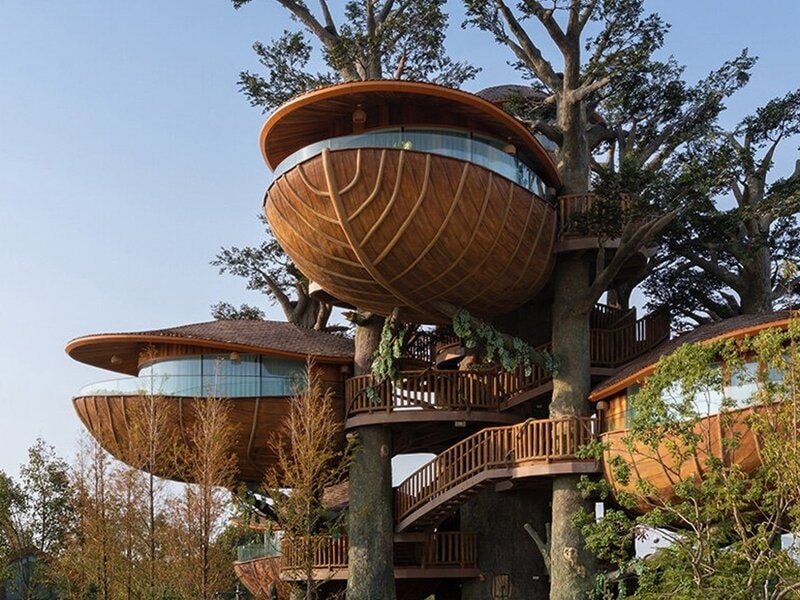
The Forest Nests Treepod Project uses a prefabricated steel frame as the core structure, allowing each unit to be built off-site before final assembly on location. The exterior combines wood shingles, weathering-steel panels, aluminum elements and large glazing sections to form a durable envelope that meets environmental requirements while reducing on-site construction time. The interior layout follows the curved geometry of the shell and is organized around a central support system that carries mechanical and electrical components. The design also incorporates passive strategies that respond to local climate conditions to reduce operational demands.
The project applies a modular production approach that enables consistent manufacturing while allowing minor variations in cladding and openings. The structural system supports elevated placement when required, minimizing ground impact and permitting installation on uneven terrain. The units integrate basic smart-control functions and standard utilities to streamline operation in remote or resort-style settings.
Image Credit: Doarchiwow
What's Driving This Trend
- Sustainable Modular Construction
- The innovative combination of prefabricated elements and sustainable materials in modular treepods points towards an eco-friendly revolution in construction techniques.
- Smart-control Systems in Prefab Housing
- Integration of smart-control functions into modular housing units paves the way for intelligent living spaces that adapt to user needs and environmental conditions.
- Elevated Structures on Uneven Terrain
- Development of elevated modular units highlights a growing trend toward construction solutions for challenging landscapes, reducing environmental footprint and enhancing site adaptability.
Who This Affects Most
- Eco-friendly Architecture
- The use of sustainable materials and passive environmental strategies in the Forest Nests Project showcases opportunities for eco-conscious architectural innovations.
- Modular Manufacturing
- Incorporating a modular production approach demonstrates potential for efficient and scalable manufacturing processes across the construction industry.
- Smart Home Technology
- Smart-control integration within prefab units indicates a convergence of home automation technologies with innovative architectural designs.