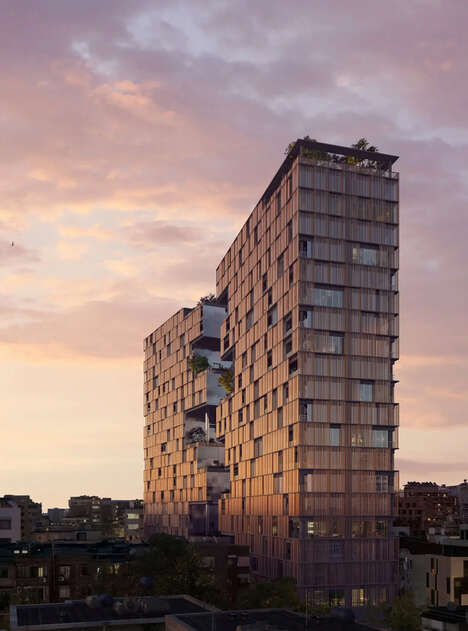
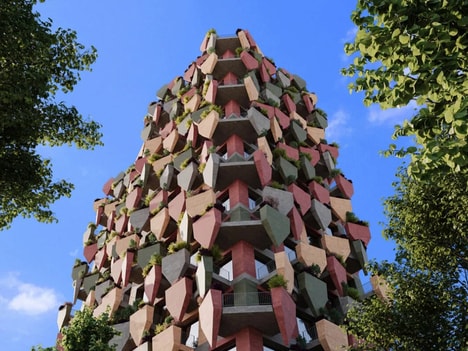
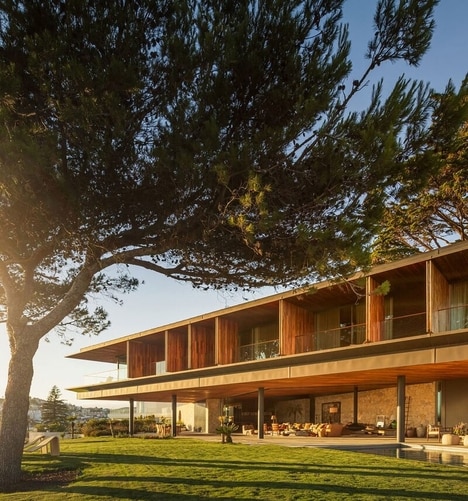
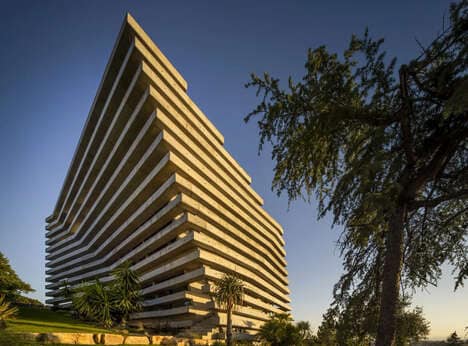
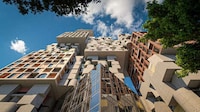
OODA recently completed the design of the Miramar Tower, a residential structure in Porto, Portugal. This project presents a distinctive architectural approach characterized by its volumetric composition and emphasis on expansive outdoor living spaces.
The Miramar Tower's design places a particular emphasis on allocating substantial terrace and garden areas for each residential unit. OODA arranged these balconies in a spiraling configuration around the building's facade — an approach that helps to create a dynamic visual effect of rotation and vertical movement. The structural expression and the use of concrete are noted as central to the project's sculptural quality, as well. The layout of the interior spaces is organized to facilitate a strong connection between inside and outside areas, with the ground level incorporating natural vegetation intended to enhance the local microclimate.
Image Credit: Fernando Guerra
Why This Trend Is Growing
- Spiral Balconies
- The innovative use of spiraling balconies showcases a trend towards integrating dynamic architectural forms into residential building designs.
- Incorporating Nature
- Emphasizing natural vegetation in urban structures points to a growing trend of using biophilic design to enhance microclimates in built environments.
- Inside-outside Connectivity
- A focus on seamless transitions between indoor and outdoor spaces illustrates a trend towards designing more integrated and fluid living environments.
Industries Being Reshaped
- Residential Architecture
- The residential architecture industry can leverage innovative structural designs to create buildings that offer both visual appeal and enhanced livability.
- Eco-friendly Construction
- The eco-friendly construction industry benefits from designs that incorporate natural elements to improve sustainability and environmental compatibility.
- Urban Planning
- Urban planning is impacted by new architectural designs that prioritize outdoor living and connectivity to natural elements within city environments.