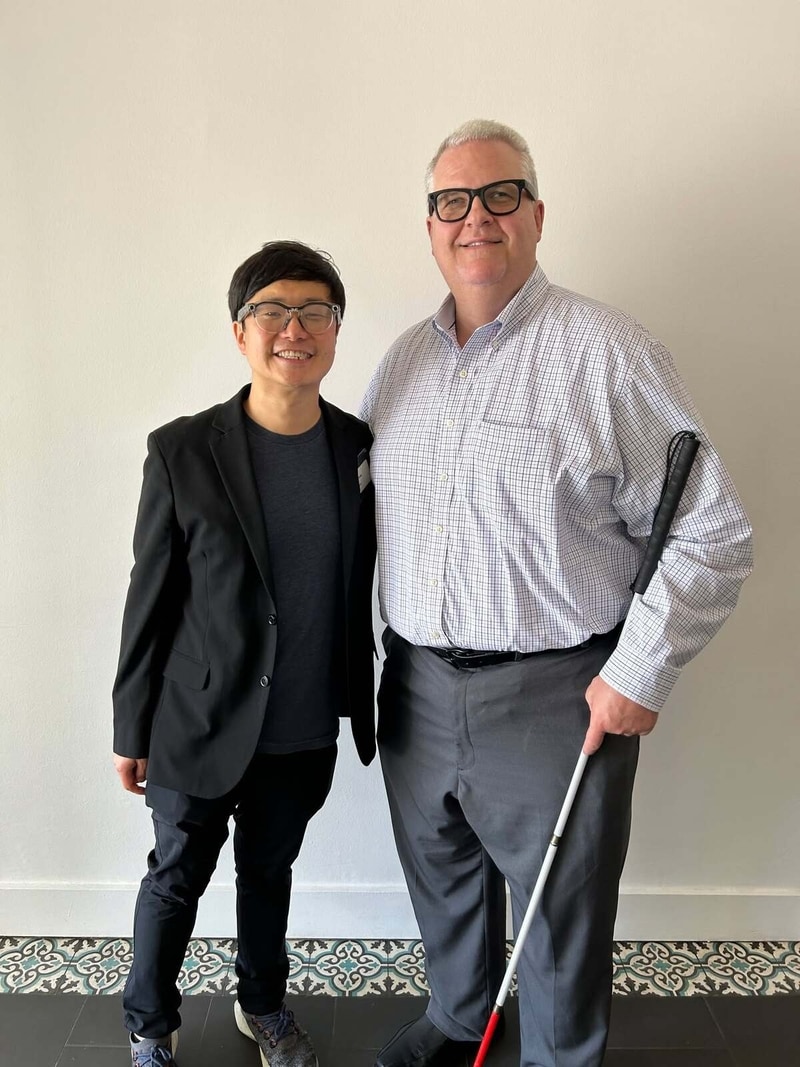
The American Council of the Blind, in collaboration with Meta and the Blinded Veterans Association, is orchestrating a distribution event on July 27 in St. Louis to provide Ray-Ban Meta AI glasses at no cost to eligible veterans who are blind. This initiative falls under a broader commitment from Meta to donate these smart glasses to 130,000 visually impaired veterans globally, with the American Council of the Blind serving as a key partner to not only facilitate the handover but also to offer accompanying training resources to ensure recipients can fully utilize the technology.
The Ray-Ban Meta AI glasses themselves are lightweight and hands-free. They integrate artificial intelligence to assist with daily activities by allowing users to verbally inquire about their immediate environment, have printed text read aloud to them, recognize specific items, and even capture visual media.
Image Credit: The American Council of the Blind
What Makes This Trend Stand Out
- Accessible AI Wearables
- Lightweight smart glasses with voice-based AI create new possibilities for assistive products that blend mobility support, object recognition, and everyday independence.
- Veteran-focused Tech Donations
- Large-scale device distribution programs highlight how public-interest partnerships can accelerate adoption of emerging technologies among underserved communities.
- Hands-free Environmental Intelligence
- AI systems that describe surroundings, read text, and identify objects are reshaping how users interact with physical spaces without relying on screens.
Sectors Adopting This
- Assistive Technology
- Smart eyewear expands the market for adaptive tools that combine accessibility, personalization, and real-time contextual awareness.
- Consumer Electronics
- Mainstream wearable brands are gaining opportunities to serve specialized user groups by embedding inclusive features into familiar lifestyle products.
- Healthcare and Rehabilitation
- Training-supported AI devices introduce new models for vision rehabilitation, daily living assistance, and long-term patient empowerment.