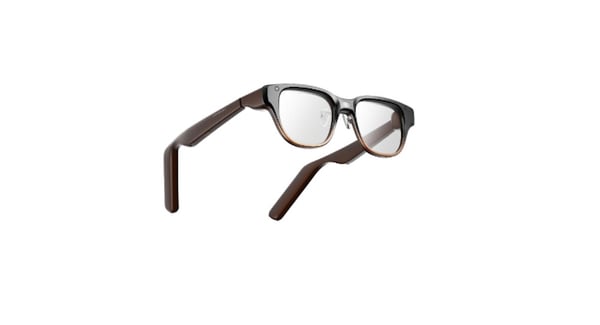
Meta has announced the launch of its AI Glasses Impact Grants, a program designed to support United States-based organizations that are using the company's wearable technology to create positive societal and economic value within their communities.
The AI Glasses Impact Grant initiative offers two distinct funding paths — Accelerator Grants, ranging from $25,000 to $50,000, for organizations already leveraging Meta's AI glasses to scale their existing impact, and Catalyst Grants of $200,000 for those proposing new, innovative applications using the Meta Wearables Device Access Toolkit. In total, nearly $2 million will be distributed to more than 30 organizations and developers, who will also gain membership in the Meta Wearables Community, a network intended to foster collaboration and innovation among researchers, developers, and other stakeholders working with the technology.
Image Credit: Meta
What's Driving This Trend
- Wearable Accessibility Acceleration
- Expanding grant support for wearables is enabling the rapid development of sensor-driven assistive solutions that can redefine independence for people with disabilities.
- Funding-as-innovation Catalyst
- Targeted grant tiers are shifting funding from pilot projects to scalable deployments, creating space for novel service models that blend hardware, software, and community support.
- Developer Community Cohorts
- Curated membership networks for wearable developers are fostering collaborative ecosystems where cross-disciplinary prototypes can converge into platform-level standards.
Who This Affects Most
- Assistive Technology
- Integration of AI-enabled eyewear into assistive tech portfolios is opening routes for personalized, context-aware rehabilitation and communication tools.
- Philanthropy and Grantmaking
- Strategic grant programs tied to specific hardware platforms are transforming philanthropic capital into long-term, measurable technology adoption efforts.
- Wearable Hardware and Platforms
- Platform-linked funding and toolkits are incentivizing manufacturers and platform owners to embed extensible APIs and modular sensors that accelerate third-party innovation.