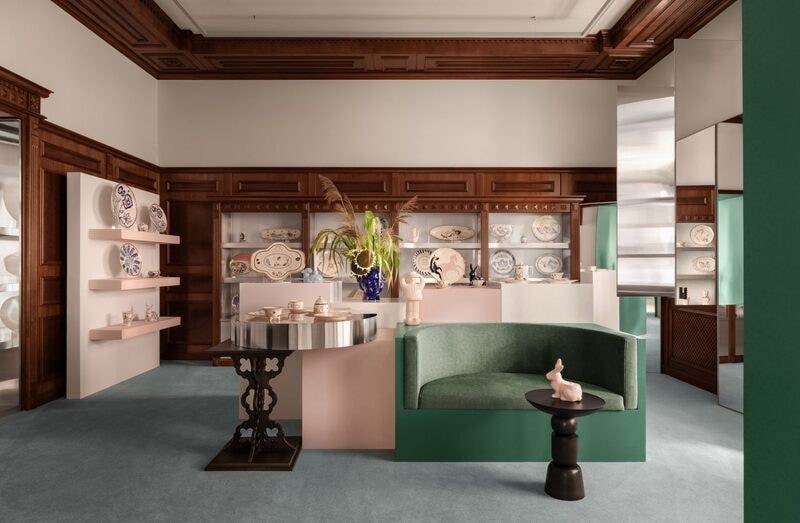
Temp Project has transformed a former embassy building in Kyiv into a contemporary showroom while preserving key architectural elements from the original structure. Designed by Anastasiia Tempynska, the interior balances historical features with new materials and spatial interventions suited to a modern retail environment.
Original timber ceilings and wall panels were retained and restored, forming a dark, textural backdrop against lighter insertions such as stainless steel surfaces, milky glass partitions, and white display elements. The layout guides visitors through the space in a sequence that resembles a garden path, with display zones unfolding gradually rather than presenting a single open plan.
Color accents drawn from Ukrainian cultural references appear throughout the interior, alongside custom furniture made by local artisans. Ceramic elements, reflective finishes, and minimal fixtures support product presentation without overpowering the existing architecture.
Image Credit: Temp Project
What's Driving This Trend
- Adaptive Reuse Retail
- Repurposing former civic or diplomatic buildings into retail showrooms creates a new real estate typology that commands premium positioning through heritage authenticity and experiential differentiation.
- Heritage-modern Material Fusion
- Combining restored timber and historic fabric with stainless steel, milky glass, and reflective finishes generates a hybrid aesthetic that redefines material hierarchies and product presentation strategies.
- Sequential Experiential Layouts
- Designing store plans as a series of unfolding zones or 'garden path' journeys shifts emphasis from open-plan merchandising to choreographed discovery and prolonged visitor engagement.
Who This Affects Most
- Retail Interiors
- Showroom conversions informed by preserved architecture suggest novel service offerings and product-format innovations tailored to context-rich, high-touch retail environments.
- Heritage Conservation
- Cross-disciplinary projects that integrate contemporary retail functions into protected structures reveal new funding models and adaptive standards for conserving living urban fabric.
- Local Craft and Ceramics
- Elevated use of regionally made furniture and ceramic elements points to scalable collaborations that can monetize artisanal production through design-led commercial channels.