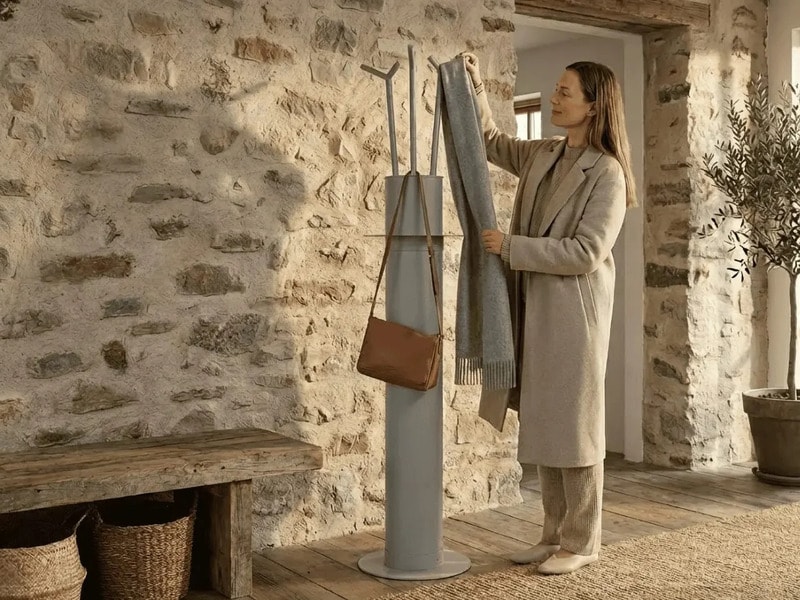
The bold Walking Coat Rack is a furniture concept by Italian designer Cesare Miozzi that combines a freestanding coat rack with a detachable walking stick. When used indoors, the object functions as a vertical rack with branching arms for hanging coats and accessories. When heading out, one of the branches can be removed and carried as a walking aid.
The structure is inspired by the form of a tree, with a circular base that provides stability and an upper ring that can be used to hold small everyday items. Each branch is shaped to support garments when the rack is assembled and to provide a comfortable grip when detached. The design allows the object to shift between stationary furniture and a personal accessory without changing components. The design enables one branch to be removed and used as a walking aid while the rack remains in place.
Image Credit: Cesare Miozzi
Key Themes Behind This Trend
- Convertible Furniture
- A single object performing multiple household roles creates potential for products that reduce clutter and replace separate pieces of furniture.
- Assistive-design Integration
- Combining everyday objects with mobility aids opens possibilities for mainstreaming assistive devices through appealing, non-stigmatizing design.
- Biomimetic Form Factor
- Tree-inspired structural language that informs both stability and ergonomics allows rethinking aesthetic cues as functional design drivers.
Where This Applies
- Home Furnishings
- The merging of decorative and utilitarian functions signals opportunities for furniture lines that prioritize adaptability and space efficiency.
- Mobility Aids
- Products that disguise or integrate support features into everyday objects could disrupt traditional assistive-device markets by appealing to broader consumer tastes.
- Hospitality and Senior Living
- Environments that value both dignity and flexibility may benefit from fixtures that serve guests and residents while offering discreet mobility support.