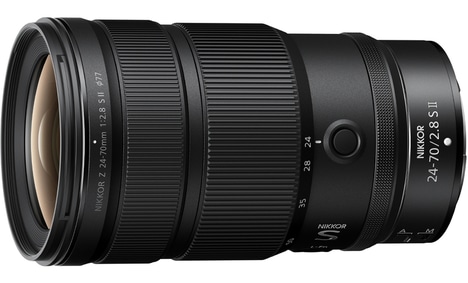
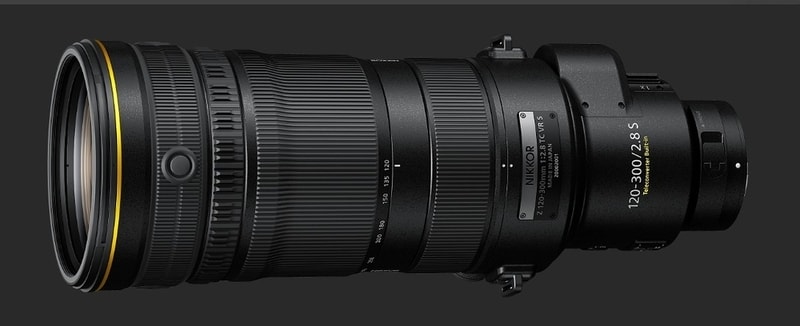
Nikon is developing a new NIKKOR Z 120-300mm F2.8 teleconverter zoom lens, a telephoto optic designed for full-frame mirrorless cameras. This product design features a built-in 1.4x teleconverter and constant f/2.8 aperture across the entire zoom range.
The NIKKOR Z 120-300mm F2.8 teleconverter zoom lens combines a versatile zoom range starting at 120mm and extending to 300mm with the ability to instantly reach 420mm at f/4 simply by engaging the internal converter. This effectively gives photographers two high-quality lenses in a single barrel. The constant f/2.8 aperture allows shooting in fading evening light or dim forest canopies without raising ISO to noisy levels, while the built-in teleconverter enhances efficiency. Additionally, as an S-Line lens, Nikon's offering promises rigorous optical quality control.
Image Credit: Nikon
What Makes This Trend Stand Out
- Integrated-teleconverter Optics
- A lens with a built-in 1.4x teleconverter consolidates multiple focal lengths into one unit, enabling compact high-reach optics without adding external adapters.
- Constant Wide-aperture Zooms
- Maintaining an f/2.8 aperture across an extended zoom range preserves low-light performance and depth-of-field control typically reserved for prime lenses.
- Dual-function Lens Barrels
- Designs that deliver two distinct optical modes from a single barrel create opportunities for multifunctional equipment that blurs the line between zooms and super-telephoto primes.
Sectors Adopting This
- Professional Photography
- High-end portrait, event, and editorial photographers stand to benefit from versatile, high-quality optics that reduce kit size while expanding creative reach.
- Wildlife and Sports Imaging
- Observers and photojournalists in fast-action environments could rely on integrated teleconverter zooms to capture distant subjects with minimal lens swaps.
- Optical Component Manufacturing
- Manufacturers of lens elements and assemblies may see demand for more complex, tightly controlled optical systems that integrate converters and maintain constant apertures.