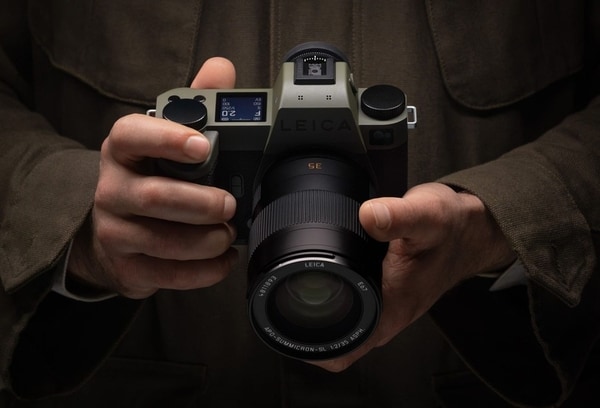
Leica Camera AG has announced the introduction of the Noctilux-M 35 f/1.2 ASPH, marking the inaugural time the esteemed Noctilux designation has been applied to a 35mm focal length within its M-series lens lineage. This model upholds the series' historical association with exceptionally wide apertures and superior optical engineering that can deliver pronounced contrast, a shallow depth of field, and a smooth bokeh quality.
Leica Camera AG's Noctilux-M 35 f/1.2 ASPH lens is designed for compatibility with Leica M cameras, and its inclusion will offer a closer minimum focusing distance than previous Noctilux models. The 35mm perspective is widely favored for documentary, street, and environmental portrait photography because it provides a natural field of view that includes subject context. By endowing this focal length with a very wide f/1.2 aperture, Leica provides a tool that excels in low-light conditions and offers exceptional control over focus isolation.
Image Credit: Leica Camera AG
Why This Trend Is Growing
- Wide-aperture Lens Innovations
- The introduction of the f/1.2 aperture to the 35mm lens expands photographic capabilities in low-light environments, highlighting the trend of wide-aperture lens innovations.
- Enhanced Focus Isolation
- Leica's offering with exceptional control over focus isolation suggests an evolving trend towards lenses that enhance subject separation and depth-of-field manipulation.
- Compact Lens Design
- The smaller form factor of the 35mm lens combined with high-performance features indicates a trend in compact lens design that caters to mobile professional photographers.
Industries Being Reshaped
- Photography Equipment
- Rapid advancements in lens technology are reshaping the photography equipment industry, providing versatile tools for professionals and hobbyists alike.
- Consumer Electronics
- As lenses with improved features continue to emerge, the consumer electronics industry sees a continuous push for innovative photography solutions embedded in everyday devices.
- Optical Manufacturing
- The demand for advanced optical engineering in new camera lenses is propelling growth and innovation within the optical manufacturing industry.