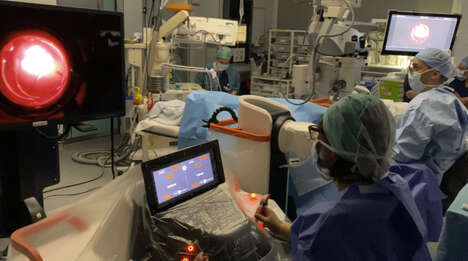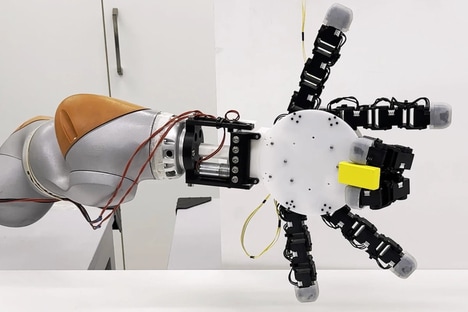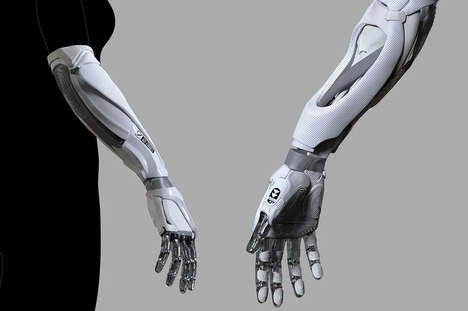
A group of innovative scientists and engineers based at the Fraunhofer Institute in Germany have developed an incredibly high-tech and futuristic surgical arm that works in a robotic manner to assist surgeons on the operating table. The device is essentially a metal hand that allows surgeons more direct control over what's going on on the operating table.
The device is capable of sturdily holding onto the typical surgical instruments commonly seen in operating rooms of hospitals. It can operate things like endoscopes, which are devices that are used to capture footage inside patient's bodies. Once a surgeon makes the first incision, the surgical arm can then hold the tool and change around its position without causing any damage or making unwanted contact inside the patient's body.
Ultimately, the surgical arm will enable surgeons to carry out procedures more efficiently and safely.
Key Themes Behind This Trend
- Robotic Surgical Arms
- This trend of robotic surgical arms enables surgeons to have more direct control and precision during surgeries.
- Advanced Operating Room Technology
- This trend of advanced operating room technology like robotic surgical arms enhances surgical procedures and improves patient outcomes.
- Minimally Invasive Surgery
- This trend of using robotic surgical arms for minimally invasive surgery allows for smaller incisions, faster recovery, and reduced risk of infection.
Where This Applies
- Healthcare
- The healthcare industry can benefit from robotic surgical arms by improving surgical procedures, reducing complications, and enhancing patient care.
- Medical Device Manufacturing
- The medical device manufacturing industry can take advantage of the growing demand for robotic surgical arms by developing and supplying innovative and high-quality surgical arm products.
- Surgical Robotics
- The surgical robotics industry can incorporate advances in robotic surgical arms to develop more advanced and versatile robotic systems for various surgical procedures.