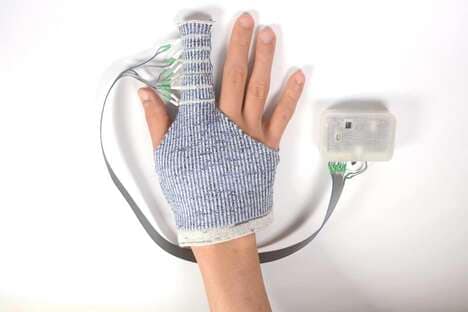
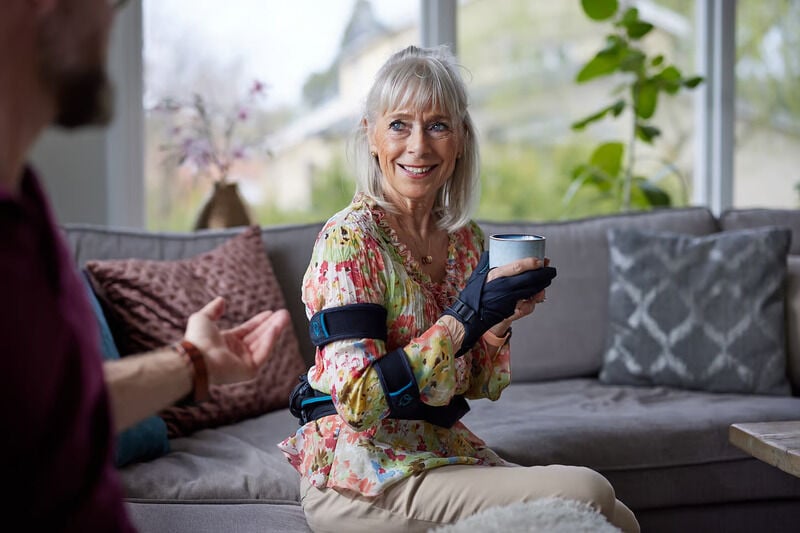
The Bioservo 'Carbonhand' robo-glove is a solution for those who are dealing with osteoarthritis or myositis to provide them with a way to maintain their independence.
The accessory comes in the form of a soft robotic glove that will prevent stress on the hand during recovery, while also helping with strengthening when it comes to rehabilitation. The unit features pressure sensors that will activate a series of motors within to help the person grip items with more control. The result is a natural and dynamic level of performance with up to 20 newtons of force per finger.
The Bioservo 'Carbonhand' robo-glove can be further customized via an accompanying smartphone app where users can control the capabilities on the thumb, second and third fingers alike.
Image Credit: Bioservo
What Makes This Trend Stand Out
- Smart Robotic Wearables
- Integrating pressure sensors and customizable control via smartphone apps, smart robotic wearables enhance human capabilities with precision and adaptability.
- Assistive Rehabilitation Technology
- Combining soft robotics with ergonomic design, assistive rehabilitation technologies provide effective support for individuals with physical impairments.
- Customized Biomechanical Assistance
- Offering tailored performance through app-based adjustments, customized biomechanical assistance devices deliver personalized support for user-specific needs.
Sectors Adopting This
- Healthcare Technology
- Healthcare technology innovations are pushing the boundaries of patient care with advanced, user-friendly devices aimed at improving quality of life.
- Wearable Tech
- The wearable tech industry is expanding with devices that augment physical abilities, offering new solutions for both health and productivity.
- Rehabilitation Devices
- Rehabilitation devices are evolving to incorporate smart functionalities, providing more effective and responsive treatments for recovery.