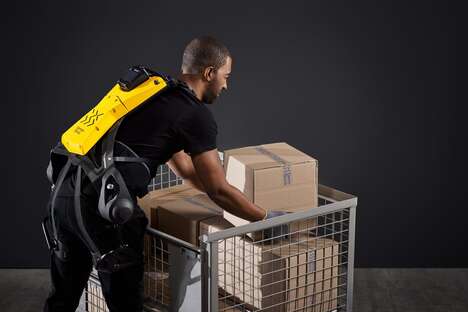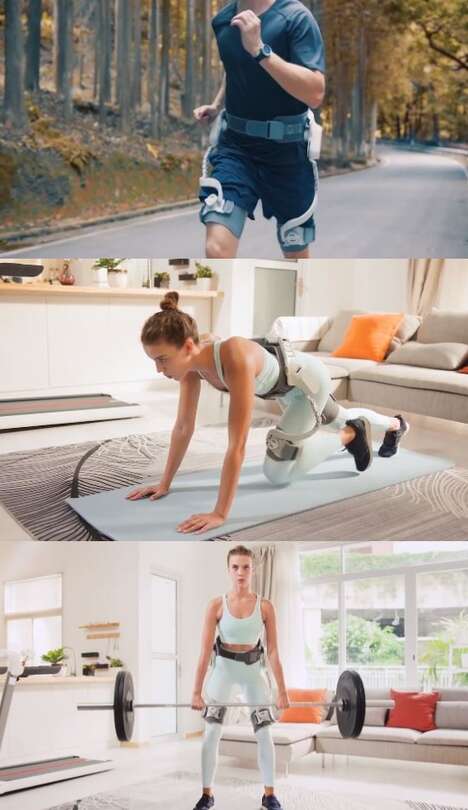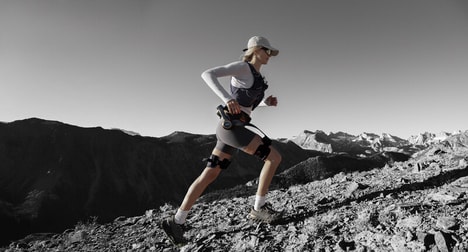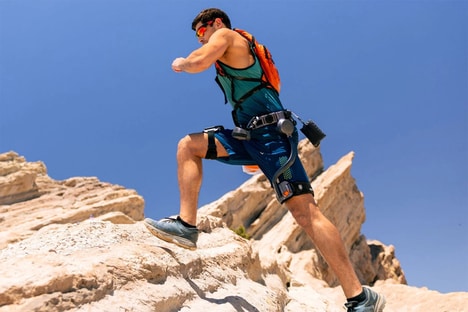
Ottobock, a German company that specializes in the design and manufacture of exoskeletons, orthoses and prosthetics, has launched an innovative upper-body exoskeleton that is designed to help wearers get more strength and leverage out of their body whilst evading injury and fatigue.
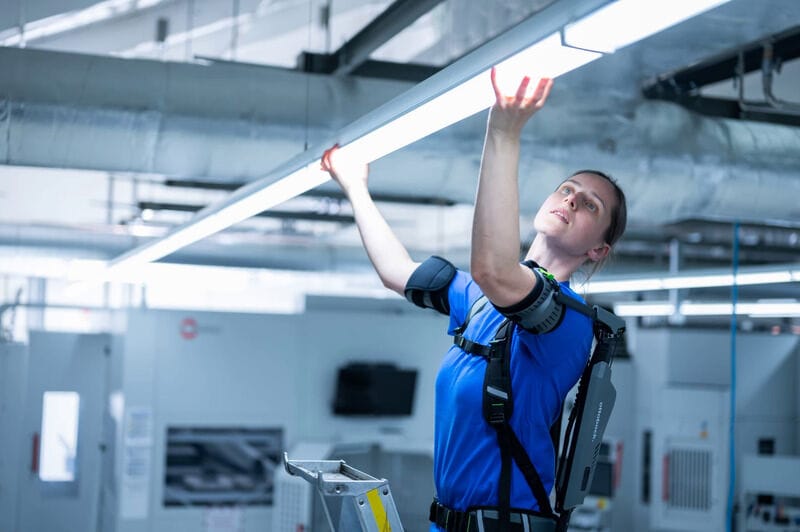
The 'Ottobock Shoulder' is an upper-body exoskeleton that the company says is designed to channel wearers' potential energy into a cable and spring system. "This potential energy is absorbed, with minimal amount of exertion on the wearer, when the arms are lowered," explained Ottobock's chief scientist Dr. Homayoon Kazerooni, with the end result being that the stored energy is harnessed to allow wearers to raise their arms with reduced effort.
Worn like a backpack, this upper-body exoskeleton does not require a battery pack or electrical connection, and is available for $4,990.
Image Credit: Ottobock
What's Driving This Trend
- Assistive-exoskeleton-technology
- Assistive exoskeletons will continue to revolutionize the healthcare industry by providing a greater range of motion with reduced effort and fatigue.
- Non-electrical Exoskeletons
- The development of non-electrical exoskeletons will lead to more affordable assistive technologies and more widespread use.
- Ergonomic Wearables
- There will be an increased demand for ergonomic wearables that reduce physical exertion and decrease the potential for workplace injuries.
Who This Affects Most
- Healthcare
- Assistive exoskeleton technology is revolutionizing the healthcare industry and providing a new way to aid patients with mobility and strength.
- Manufacturing
- The development of non-electrical exoskeletons will have a major impact on the manufacturing industry by reducing physical strain and increasing productivity.
- Construction
- Ergonomic wearables have the potential to reduce the number of injuries in the construction industry and enhance worker safety.