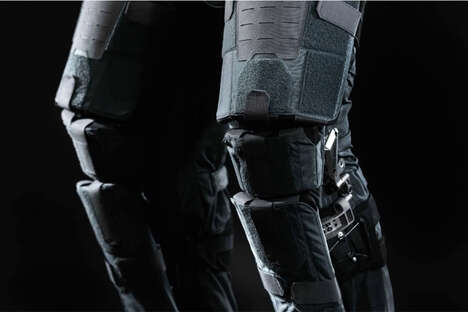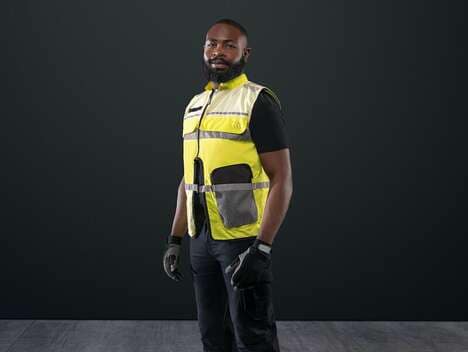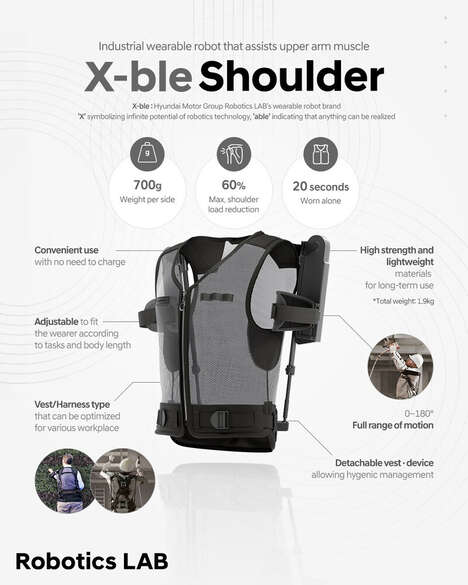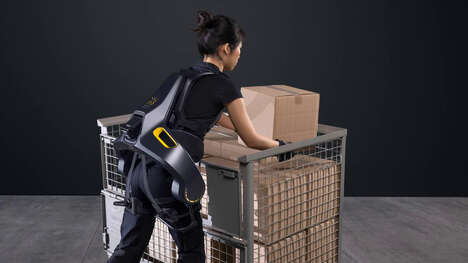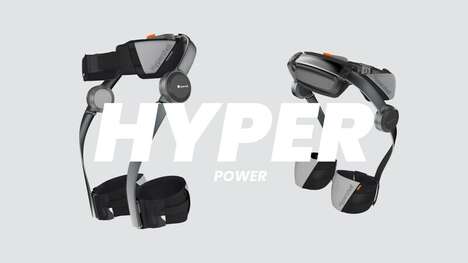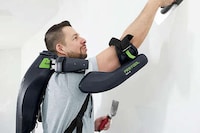
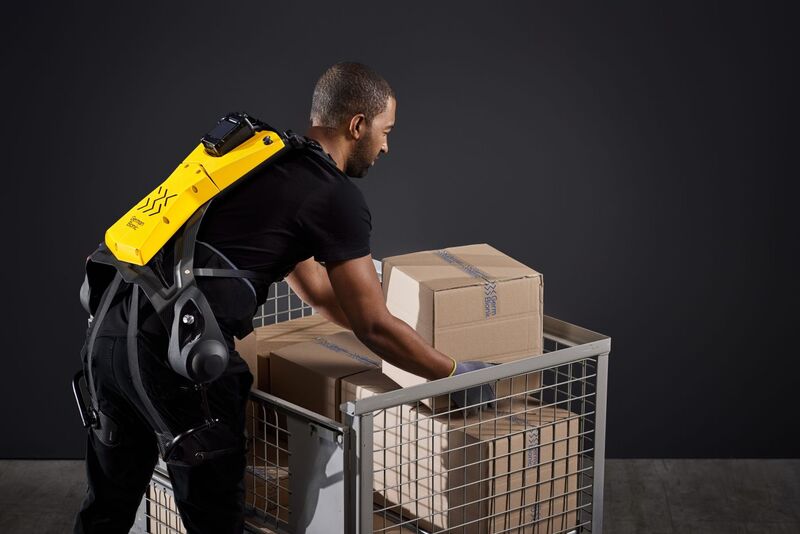
German Bionic, a company specializing in robotic exoskeleton systems, has announced the launch of Cray X, a new wearable human-robotic exoskeleton designed to provide mechanical assistance for physically demanding manual labor.
The new system is capable of supporting an additional 66 pounds per lift, meaning Cray X wearers will be able to pick up and carry substantially heavier loads without introducing any additional stress to their backs. As of right now, the innovative vest-like system is set to launch in early 2022 and will be available as a hardware-as-a-service subscription model.
According to the company, the machine "works by gently pushing the legs forward when loads need to be moved from a to b," which helps reduce premature exhaustion, allowing workers to preserve their energy while avoiding injury.
Image Credit: German Bionic
Key Themes Behind This Trend
- Supportive Exoskeleton Systems
- Companies can develop wearable robotic exoskeletons that augment physical strength and support labor workers in their tasks.
- Hardware-as-a-service Subscription Model
- Businesses can offer exoskeleton services, like the German Bionic's Cray X, to customers through subscription-based or lease-to-own models.
- Reduction of Premature Exhaustion
- Entrepreneurs can develop technology that lessens the fatigue and muscle strain of physical laborers, increasing their efficiency and productivity.
Where This Applies
- Manufacturing
- Exoskeletons can help workers lift heavier loads, streamlining the manufacturing process and reducing the risk of injuries.
- Construction
- Robotic exoskeletons can support manual laborers in tasks like heavy lifting and repetitive motions, reducing the risk of chronic injury.
- Logistics and Warehousing
- Wearable robotic exoskeletons can optimize logistics and warehouse operations by enabling employees to transport and store heavier loads with increased ease and efficiency.