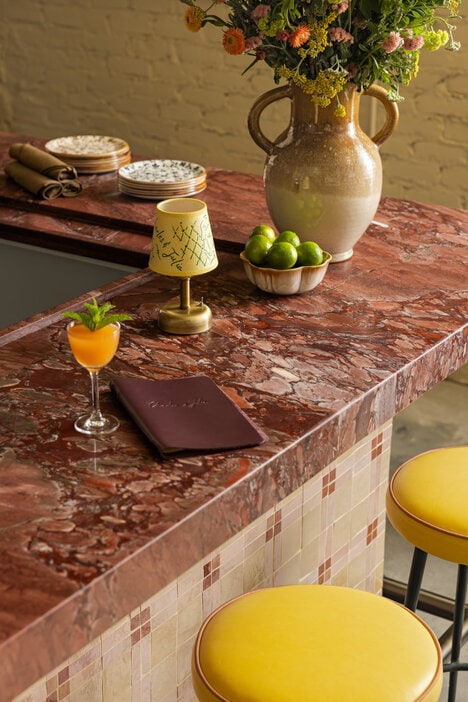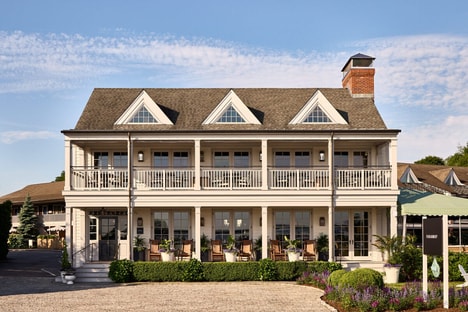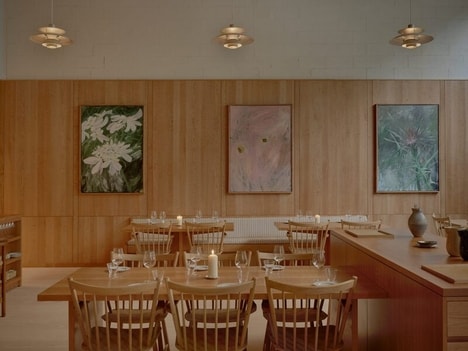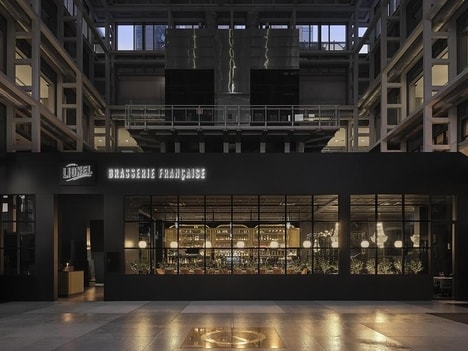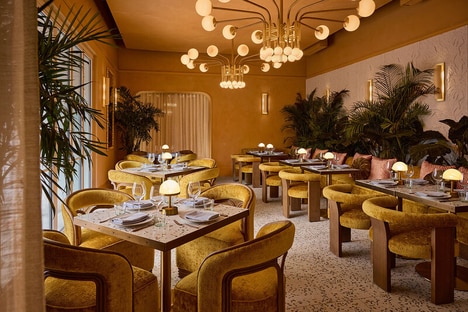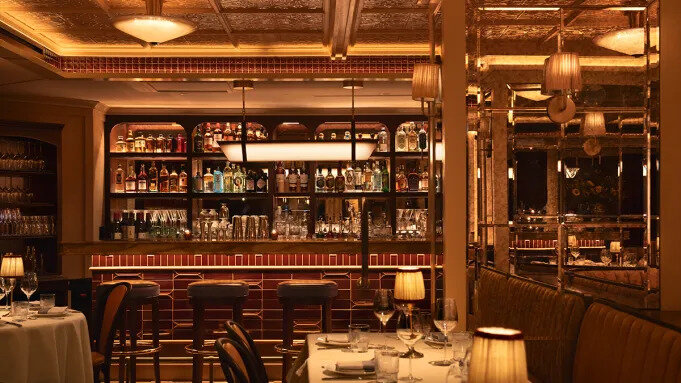
Catch Hospitality Group introduced Cafe Charmant, a West Village French brasserie with coastal Riviera cues, designed by Rockwell Group and seating 70. The interior blends deep navy, dark woods and leather with lime-washed walls, a gilded, swirling ceiling and a red-draped bar lit by small golden lamps.
Executive chef Jake Tyler Brodsky, whose resume includes Eleven Madison Park and Palm Heights in Grand Cayman, created a menu pairing brasserie staples such as spicy moules gratin and steak frites with seafood-forward plates like wild shrimp carpaccio, a king crab croque, curry duck pastel, and a razor clam pasta. Beverage director Lucas Robinson crafts cocktails from in-house ingredients using techniques such as sous vide and fat washing, including a Provencal Dirty Martini and a Cucumber Sour. At the same time, Emily Buse curated the wine list. The result is a transportive dining option that blends seaside flavors with classic French comfort, offering both familiar bistro moments and more adventurous coastal plates.
For diners seeking a sunlit, sensorial meal in downtown New York, Cafe Charmant emphasizes craftsmanship in food and cocktails and expands Catch’s roster of neighborhood destinations.
Image Credit: Emily Andrews
What's Driving This Trend
- Coastal-brasserie Hybrids
- French comfort dining gains fresh relevance through Riviera-inspired seafood menus that merge familiar bistro formats with destination-style coastal escapism.
- Transportive Restaurant Design
- Highly atmospheric interiors with layered lighting, bold color palettes and artisanal finishes create immersive dining environments that compete with travel and nightlife experiences.
- Craft-driven Cocktail Menus
- Bar programs built around in-house ingredients, sous vide infusions and fat-washing techniques elevate cocktails into culinary extensions of the restaurant concept.
Who This Affects Most
- Hospitality
- Neighborhood restaurant groups can differentiate urban dining portfolios through experiential concepts that combine upscale design, chef credibility and approachable regional storytelling.
- Foodservice
- Seafood-forward reinterpretations of classic brasserie dishes signal room for premium yet accessible menu innovation across casual-luxury dining formats.
- Interior Design
- Restaurant interiors that blend nostalgic European cues with contemporary theatrical details highlight demand for spaces designed as shareable, sensory brand assets.