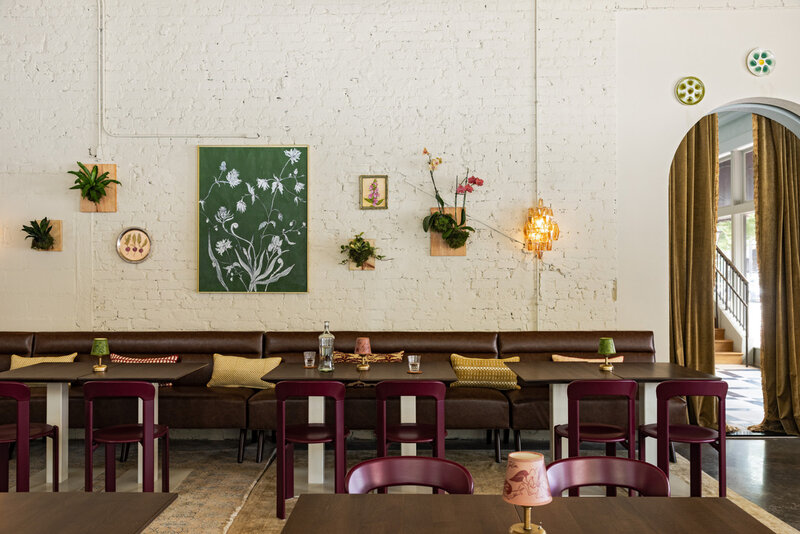
The Charles & Julia cocktail lounge occupies a renovated 1916 Stutz motorcar dealership within Hotel Perle in New Orleans. Designed by Anna Nicole Interiors, the approximately 3,000-square-foot hospitality space adopts the atmosphere of a European residence through layered materials, vintage furnishings and residential-style layouts. Exposed brick, soaring ceilings, stained oak millwork and a Calacatta Viola marble bar are complemented by botanical wallpaper, kilim rugs and Bruno Rey chairs to create a series of intimate gathering spaces.
The design balances European influences with subtle references to New Orleans through a restrained palette of chartreuse, aubergine, oxblood and warm gold. A rooftop terrace extends the experience with sculptural iron furniture, woven textures, abundant greenery and views across the city, drawing inspiration from Southern Europe and Sicily. Collaborations with local artists and makers, including custom artwork, botanical installations and locally fabricated marble elements.
Image Credit: Laura Steffan
Why This Trend Is Growing
- Residential Hospitality Design
- Cocktail lounges adopting layered, home-like interiors signal potential for venues that trade generic luxury for intimate, emotionally resonant social settings.
- Adaptive Heritage Venues
- Former commercial buildings repurposed into refined leisure spaces reveal new value in preservation-led hospitality concepts with distinctive architectural narratives.
- Localized European Aesthetics
- Blending Southern European cues with regional craft and color palettes creates differentiated interiors that feel both globally aspirational and locally rooted.
Industries Being Reshaped
- Hospitality
- Boutique hotels and lounges can gain distinction through immersive interiors that merge historic character, curated furnishings and place-based storytelling.
- Interior Design
- Design studios are finding opportunities in residentially inspired commercial spaces where vintage sourcing, artisanal materials and layered textures shape guest experience.
- Real Estate Development
- Historic adaptive reuse projects offer developers a path to transform underutilized properties into premium lifestyle destinations with cultural and experiential appeal.