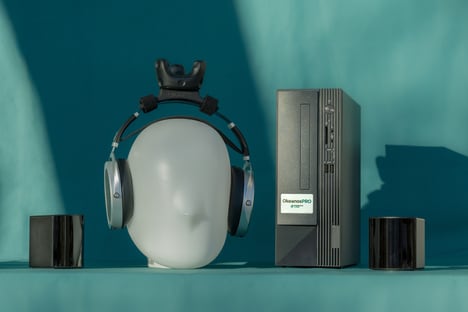
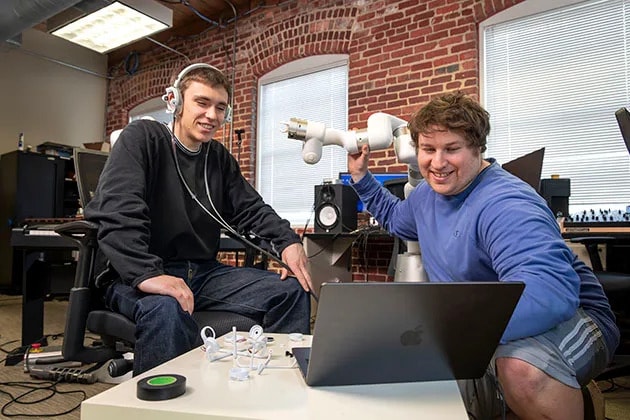
The Spherephones are a spatial awareness audio accessory developed by a team of researchers at Georgia Tech that prioritizes versatility for use in a variety of applications including industrial scenarios and even virtual reality (VR) gaming.
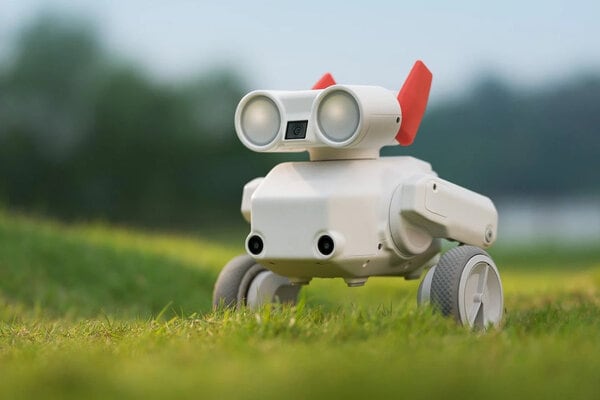
The headphones are characterized by their open-concept design that utilize spatial music to inform the user of the nearby movement of robotic equipment. This would work seamlessly to keep workers safe when working around robots, while also knowing when to expect them to interact with them to receive parts or tools without having to break their attention.
The Spherephones showcase promise within the factory environment, but also show off immersive capabilities for gaming where spatial triggers could be used to surprise and delight players in the VR environment.
Image Credit: Chris McKenney / Georgia Tech
What's Driving This Trend
- Spatial Safety Audio
- Open-ear headphones with directional sound cues create new possibilities for worker awareness in robot-dense environments without relying on visual alerts.
- Robot-aware Wearables
- Wearable interfaces that translate machine movement into intuitive sensory signals represent a growing opportunity for safer human-robot collaboration.
- Immersive Spatial Triggers
- Location-based audio prompts in VR and mixed reality environments expand the potential for more responsive, emotionally engaging digital experiences.
Who This Affects Most
- Industrial Automation
- Factories using collaborative robots could benefit from audio systems that make machine proximity and task handoffs more understandable in real time.
- Virtual Reality Gaming
- Game developers are positioned to explore spatial audio accessories as a way to heighten surprise, navigation, and immersion within interactive worlds.
- Workplace Safety Technology
- Safety platforms that incorporate ambient, non-intrusive audio feedback signal a shift toward continuous awareness tools for high-risk operational settings.