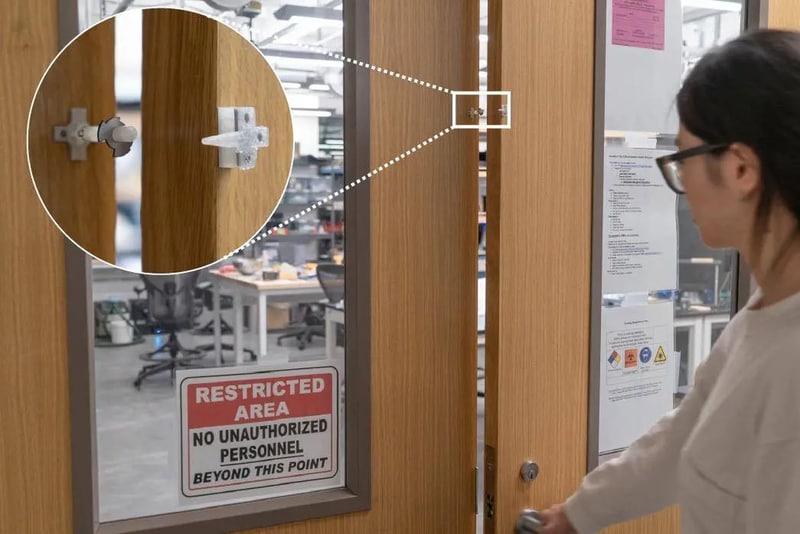
Battery-free smart sensors are reshaping how connected environments collect data by removing the need for charging, wiring, or disposable batteries. Developed by Georgia Tech researchers, these small ultrasonic metal tags can detect actions like opening doors, tracking gym repetitions, or monitoring bathroom usage through unique sound frequencies. Their low-cost, maintenance-free design makes them practical for homes, healthcare settings, warehouses, and fitness environments while also addressing privacy concerns since the signals only travel short distances and avoid camera-based surveillance.
For businesses, the technology creates opportunities for scalable and affordable smart monitoring systems that require minimal upkeep. Healthcare providers could use the sensors for elderly care monitoring, logistics companies could track storage activity, and fitness brands could integrate passive rep-counting systems into equipment. The approach also reduces hardware costs and energy consumption, supporting broader adoption of connected environments without the maintenance challenges tied to traditional smart devices.
Image Credit: Georgia Tech
Why This Trend Is Growing
- Battery-free Iot Sensors
- Low-power, battery-free sensing hardware enables persistent ambient data collection without charging constraints, opening pathways for long-lived distributed monitoring networks.
- Ultrasonic Passive Tagging
- High-frequency ultrasonic tags produce distinct acoustic signatures that support low-cost, maintenance-free identification of object and human interactions in close-range environments.
- Privacy-preserving Localized Monitoring
- Short-range, non-visual signal modalities allow behavioral and presence monitoring while minimizing exposure of sensitive imagery and long-distance tracking capabilities.
Industries Being Reshaped
- Healthcare
- Elderly and in-home care contexts can benefit from unobtrusive, battery-free activity sensors that provide continuous safety and wellness signals without camera-based surveillance.
- Logistics and Warehousing
- Storage and fulfillment operations could see cost-effective inventory and access monitoring through passive tags that track door openings, shelf interactions, and handling events.
- Fitness and Consumer Equipment
- Gym machines and home exercise devices are well-suited to integrate ultrasonic rep-counting and form-detection capabilities that require no charging or replacement batteries.