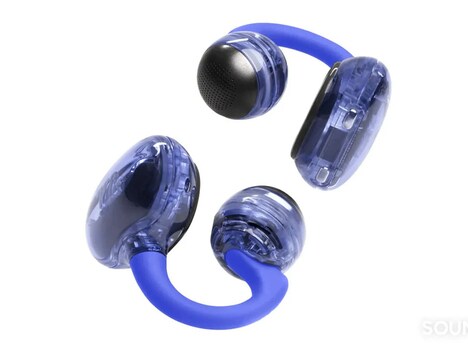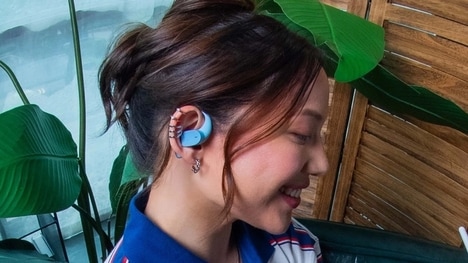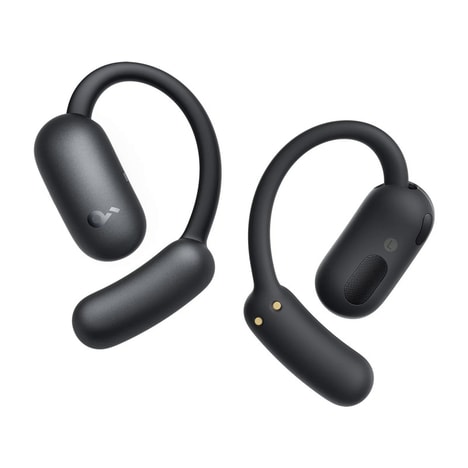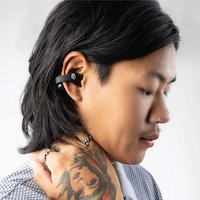
Suunto introduced the 'Spark,' its first pair of air-conduction open-ear headphones made for runners and active users who want to stay aware of their surroundings while listening. The Suunto Spark headphones weigh under 10 grams per earbud, have an IP55 sweat and dust rating and deliver up to seven hours of battery life, with a total of 36 hours including the charging case, starting at $179.
Beyond basic audio, the Spark integrates real-time cadence tracking, running mechanics monitoring and neck posture alerts. When paired with a Suunto watch, voice guidance provides pace, heart rate and distance updates hands-free. A hybrid multi-driver system supports Hi-Res Audio via LHDC 5.0 along with head-tracking spatial audio.
As wearable tech continues to evolve, Suunto shows how headphone brands are differentiating through integrated health and training features rather than competing purely on sound.
Image Credit: Suunto
Why This Trend Is Growing
- Open-ear Audio Wearables
- Facilitates a new category of situationally aware listening devices that combine environmental awareness, light form factors and extended battery life for active users.
- Integrated Health-training Headphones
- Signals convergence of biometric monitoring and audio hardware where headphones act as primary sensors for cadence, posture and training metrics.
- Spatial Audio with Motion Sensors
- Combines head-tracking spatial sound and high-resolution codecs to redefine immersive audio experiences during dynamic movement and exercise.
Industries Being Reshaped
- Sportswear and Performance Gear
- Blurs the boundary between apparel and electronics by embedding coaching-capable audio devices into the athlete’s standard gear ecosystem.
- Consumer Audio Electronics
- Shifts competitive differentiation from pure sound fidelity toward integrated health features, ecosystem pairing and hands-free guidance.
- Fitness Tech and Coaching Platforms
- Positions platforms to use continuous audio feedback and aggregated biomechanics data for more personalized training insights and program adaptation.