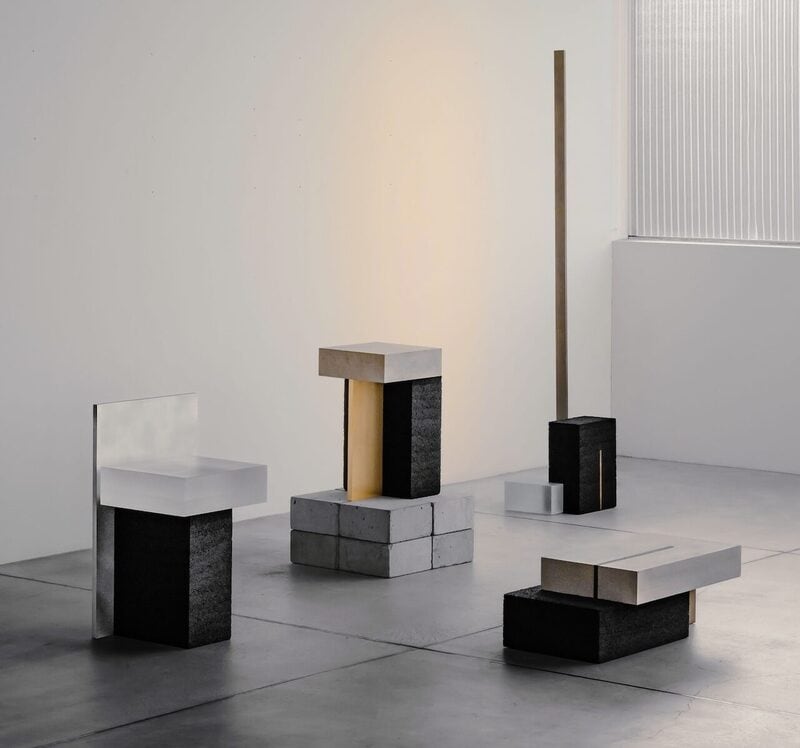
As by So Koizumi is a sculptural furniture series that revisits the material potential of asphalt by using it as a binding agent between heterogeneous components. The collection comprises stools, side tables, lighting fixtures, and wall-mounted objects in which asphalt connects elements such as metal, stone, and resin. Asphalt is shaped and finished by hand by the designer rather than sourced as a standard industrial material, and its texture and density vary according to each object’s structural and visual requirements.
Volumes of metal, cast resin, and stone intersect through asphalt junctions, with compositions that emphasize how the material negotiates contact between disparate substances. Asphalt here is treated as a structural intermediary rather than a surface layer, forming cores that support and anchor other materials. The series experiments with material relationships and assembly logic by foregrounding asphalt’s adhesive properties across functional furniture forms.
Image Credit: So Koizumi
Key Themes Behind This Trend
- Hybrid Material Furniture
- Innovating with unconventional binding agents, this trend emphasizes the integration of diverse materials such as metal, stone, and resin through new structural techniques.
- Sculptural Functionality
- Furniture design evolves with a focus on art-inspired, functional forms that challenge traditional manufacturing methods and highlight artisanal craftsmanship.
- Adaptive Material Applications
- Exploring new applications for materials like asphalt demonstrates potential shifts in design thinking and material utilization across various consumer products.
Where This Applies
- Interior Design
- Industry professionals can explore innovative design possibilities by leveraging unconventional materials and hybrid compositions that redefine furniture aesthetics.
- Construction Materials
- The use of non-traditional binding agents in furniture could disrupt conventional construction materials, offering more sustainable and versatile alternatives.
- Artisanal Manufacturing
- This industry sees a rise in the demand for unique, handcrafted items that prioritize experimental design and craftsmanship over mass production.