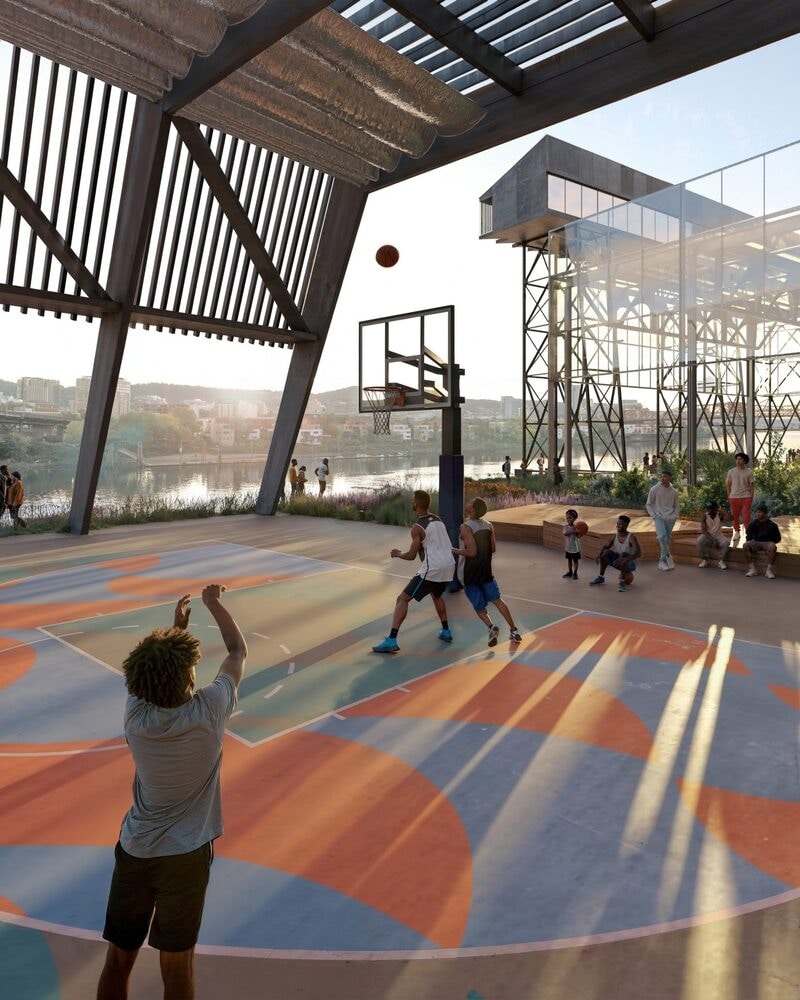
The Albina Riverside grain silo conversion by AD—WO, MALL and Wayside Studio transforms 46 historic grain silos on Portland’s Willamette River waterfront into a cultural and recreational campus commissioned by the 1803 Fund. The plan integrates adaptive reuse with new structures on the 3.2-acre site that include an Art Shed with wooden slat screening and terrace, an open-air Art Cube pavilion, and a Basketball Shed designed for year-round use, alongside a 16-storey hotel and exhibition spaces connected by The Crossing, a bridge-like terrace spanning the former terminal.
The project preserves the industrial character of the terminal while introducing terraced planters, a wading pool with river access, and pedestrian pathways that link the riverfront and public realm. Material strategies combine reused concrete, mass timber, pre-oxidised copper, and repurposed steel from the existing structure to support ecological renewal, and landscape design organizes wetlands, upland forest, and meadow zones around the complex.
Image Credit: AD—WO, MALL, & Wayside Studio, Renderings by: The Light We Make.
Key Themes Behind This Trend
- Adaptive Reuse Architecture
- Reimagining historic industrial sites as vibrant cultural spaces showcases the potential of adaptive reuse to breathe new life into overlooked structures.
- Waterfront Redevelopment
- Transforming waterfronts into multi-functional destinations presents an opportunity for cities to reconnect with their waterways while promoting ecological and recreational value.
- Sustainable Urban Design
- Incorporating reused and sustainable materials in urban developments highlights an emerging trend towards environmentally conscious construction practices.
Where This Applies
- Urban Renewal
- The revitalization of industrial sites into mixed-use developments is redefining urban renewal projects, focusing on community engagement and sustainable growth.
- Hospitality and Tourism
- Innovative integration of hotels and cultural venues within historic frameworks is creating new hospitality experiences that attract diverse audiences.
- Landscape Architecture
- Designing landscapes that harmonize ecological restoration with public amenities demonstrates landscape architecture’s evolving role in urban sustainability.