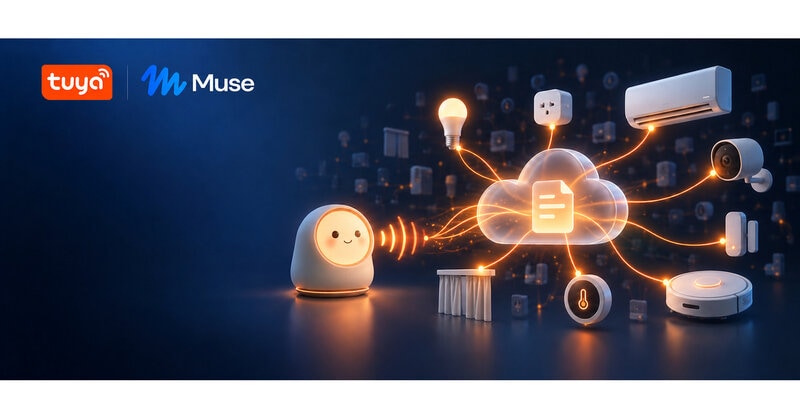
Tuya expanded open-source smart-home controls with ‘Tuya Cloud Devices,’ a Skill that lets Meta’s Muse issue natural-language commands to Tuya-connected devices. The setup works through Tuya’s cloud, so users do not need local device keys or firmware changes to ask one agent to handle lights, sensors and other home gear.
The Skill uses a single API key and reads each device’s Thing Model before acting, which helps Muse match commands to supported ranges and permissions. Tuya’s platform spans more than 3,000 hardware categories, and Muse users in the United States and Canada can use the Skill with their own Tuya accounts.
Tuya shows how reach across more than 3,000 categories can turn one integration into a broad device layer for home AI, while giving developers a reusable path for agents and hardware makers that want voice-style control without building separate connections for every device model.
Image Credit: Tuya Smart
What's Driving This Trend
- Agentic Home Control
- Natural-language AI agents are becoming unified command layers for connected devices, creating openings for platforms that translate intent into reliable multi-device actions.
- Cloud-based Device Orchestration
- Remote API-driven control reduces dependence on local firmware access, enabling scalable smart-home services that can connect fragmented hardware ecosystems.
- Open-source Smart-home Skills
- Reusable integrations are lowering developer barriers for AI-enabled home automation, positioning shared skills as a foundation for faster ecosystem expansion.
Who This Affects Most
- Smart Home Technology
- AI-controlled device networks are reshaping consumer expectations for lighting, sensors and appliances through more seamless cross-brand interoperability.
- Cloud Computing
- Centralized device management creates demand for secure, low-latency infrastructure that can support real-time commands across large connected-home fleets.
- Consumer AI Assistants
- Conversational interfaces are expanding beyond information retrieval into physical environment control, strengthening the role of assistants as household operating systems.