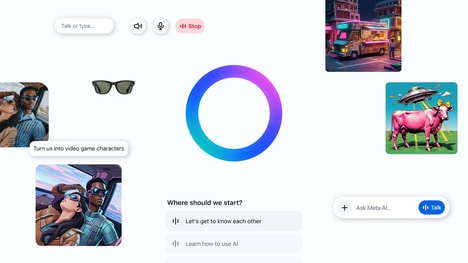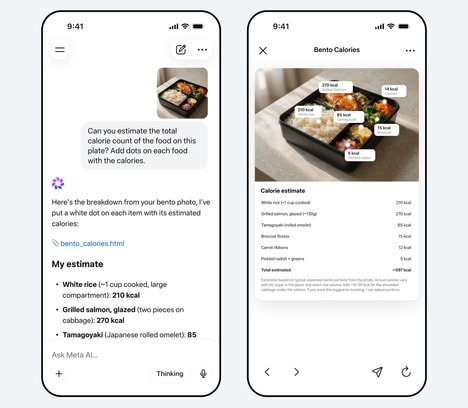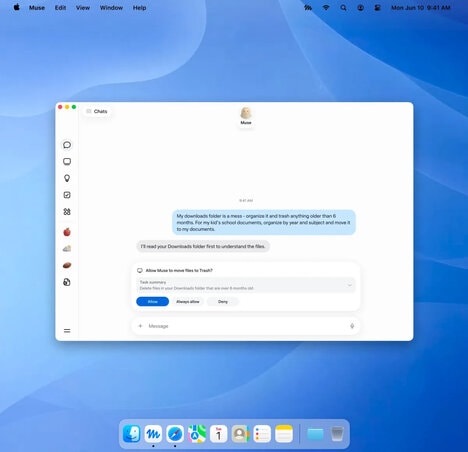
Meta is bringing its Muse agent to smaller companies with 'Muse for Small Business,' a version that can connect to professional Facebook and Instagram accounts to pull analytics and handle social media tasks. That access lets owners ask for plain-language help with posts, account performance and ad work without switching between dashboards.
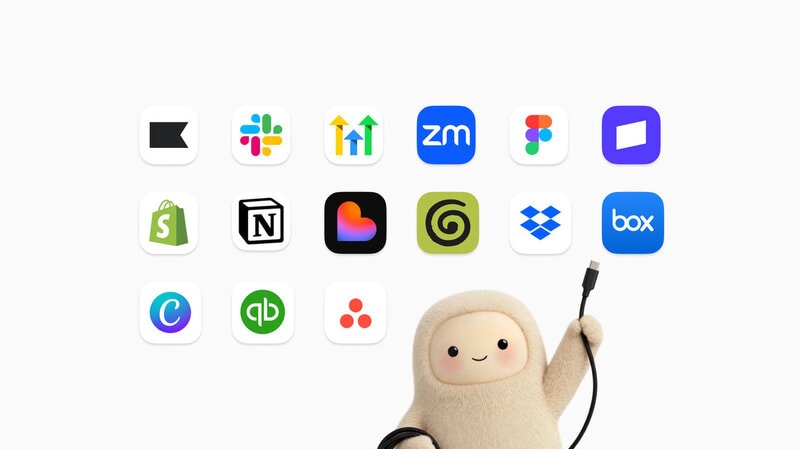
Muse also integrates with external apps such as Canva and Intuit QuickBooks, giving it a broader view of work beyond Meta's own services. It can also access advertising accounts, which makes campaign questions and planning easier to sort in one place.
For brands, small-business software now has to fit into a single assistant-led workflow instead of asking owners to bounce between separate dashboards. Competitors that keep data locked inside single apps risk feeling slower for teams trying to cut admin work and make faster decisions.
Image Credit: Meta
Key Themes Behind This Trend
- Cross-app AI Assistants
- Unified agents that connect social, finance and creative tools create room for small businesses to manage fragmented workflows through a single conversational layer.
- Plain-language Analytics
- Natural-language access to performance data lowers the technical barrier for owners and opens opportunities for more intuitive decision-making software.
- Embedded Ad Automation
- AI systems tied directly to advertising accounts can reshape campaign planning by combining budget, creative and performance insights in one interface.
Where This Applies
- Small Business Software
- Assistant-led platforms are redefining expectations for tools that previously required owners to move between disconnected dashboards.
- Digital Advertising
- Campaign management becomes more competitive as AI agents consolidate analytics, planning and optimization across multiple marketing channels.
- Financial Technology
- Integrations with accounting platforms give business assistants broader operational context and expand the role of fintech data in everyday decisions.