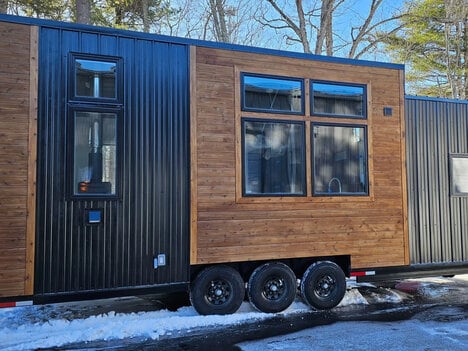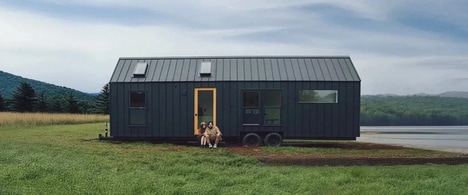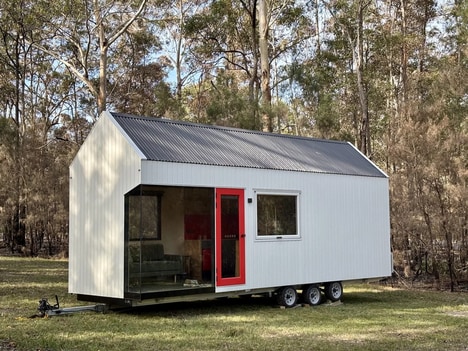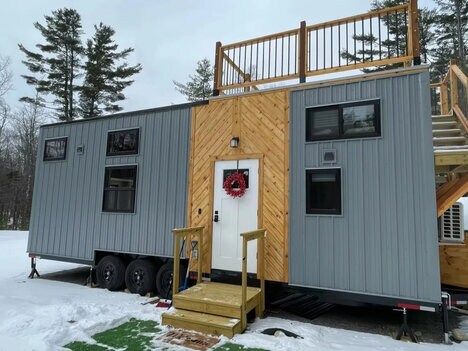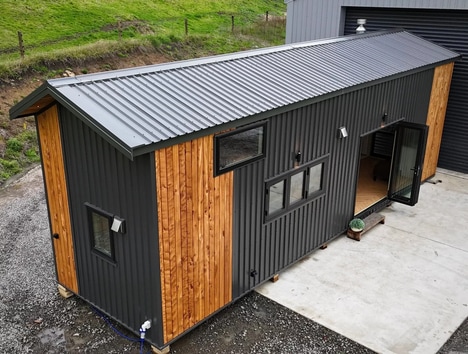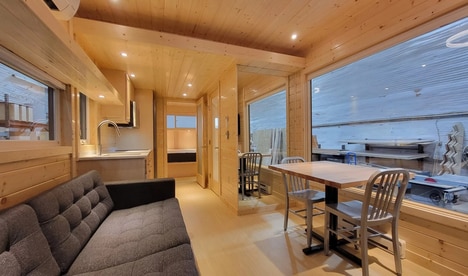
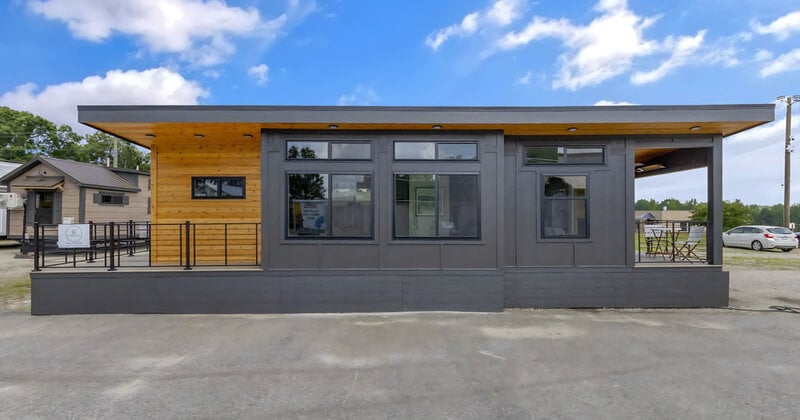
Sweet-Haus Tiny Cabin Company expands tiny-house living with the Nordic Nook, a one-bedroom home for up to two people that adds two porches so daily life can spill outdoors. Inside, the 400-sq-ft plan stays on one level around a central living room, giving the home easy circulation for full-time use on wheels.
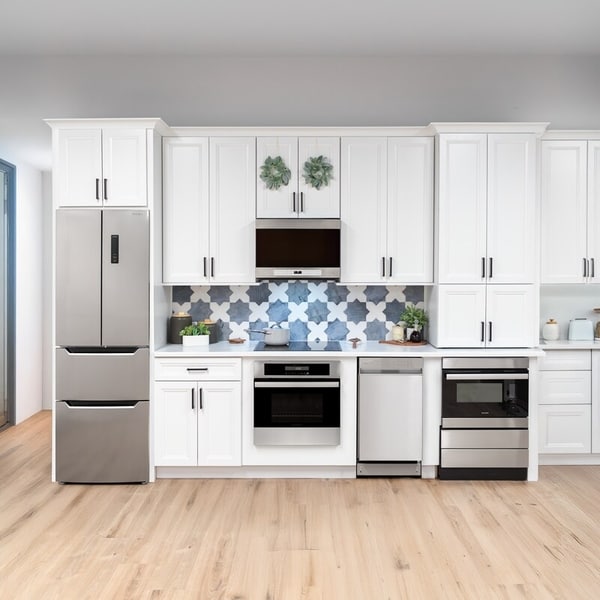
The cabin sits on a quad-axle trailer and runs 46 ft long, which makes it a better fit for semi-permanent park-model living than regular towing. A kitchen with a dishwasher and a four-burner propane stove supports everyday meals, and the bedroom opens onto the smaller porch through a sliding glass door.
At $137,000, the Nordic Nook reaches buyers who want tiny-house flexibility without giving up a house-like floor plan. Its current sale from Sweet-Haus makes the category feel less like a compromise and more like a compact, stay-awhile cabin.
Image Credit: Sweet-Haus Tiny Cabin Company
What Makes This Trend Stand Out
- Single-level Tiny Living
- Compact homes with accessible, no-loft layouts create room for age-friendly design, full-time residency, and buyers seeking comfort without conventional square footage.
- Porch-centric Microhomes
- Outdoor-connected floor plans expand perceived living space in small dwellings, opening possibilities for climate-responsive designs that blend cabin leisure with everyday housing.
- Park-model Flex Homes
- Semi-mobile tiny houses positioned for longer stays blur the line between RVs and cottages, creating new value in seasonal communities, land-lease models, and minimalist ownership.
Sectors Adopting This
- Tiny Home Manufacturing
- Manufacturers can differentiate through residential-grade amenities and livable layouts that shift tiny houses from novelty products into practical primary or retreat housing.
- Outdoor Hospitality
- Glamping resorts, campgrounds, and cabin operators gain compact premium units that support longer guest stays while maximizing land use and nature-facing experiences.
- Residential Real Estate
- Alternative housing formats like park-model cabins introduce lower-footprint ownership options for buyers priced out of traditional homes or seeking flexible second residences.