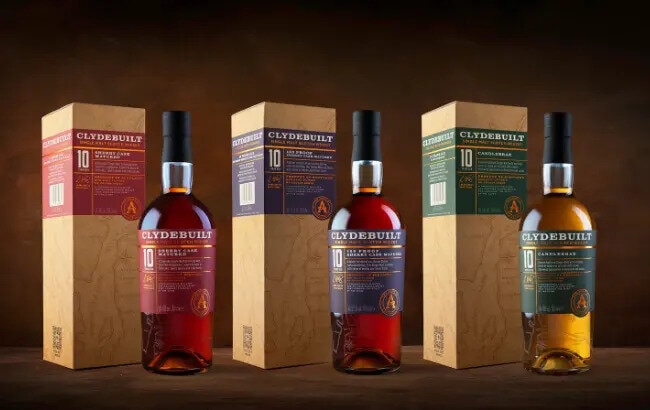
Clydebuilt is expanding its Scotch range with three single malts from Ardgowan Distillery’s independent bottling arm. The new bottles use lighter glass and FSC-certified packaging, giving the range a more streamlined look while keeping the focus on the whisky itself and its River Clyde connection.
The three bottlings offer different styles. The 100 Proof Sherry Cask Matured is the strongest at 57.1% ABV, with Sherry cask influence bringing richer and spicier notes. Candlebrae comes from an undisclosed Highland distillery and is aged in American oak, giving it a softer, waxier character. The different profiles give drinkers a choice based on taste rather than simply the distillery behind each bottle.
The range is available through specialist whisky retailers in the UK and overseas, with prices starting at £45.99. The combination of independent bottling, different cask styles and more considered packaging gives Clydebuilt a broader way to appeal to whisky drinkers looking beyond the biggest Scotch names.
Image Credit: The Spirits Business
Key Themes Behind This Trend
- Heritage-coded Spirits
- Shipbuilding narratives and regional industrial cues create room for spirits brands to differentiate through provenance, place-based storytelling, and collectible identity.
- Sustainable Premium Packaging
- Lighter glass and FSC-certified materials signal a shift toward premium alcohol formats where environmental consideration becomes part of perceived quality.
- Cask-led Discovery
- Flavor profiles shaped by sherry casks, American oak, and undisclosed distillery sourcing support new discovery models based on taste exploration rather than legacy labels.
Where This Applies
- Scotch Whisky
- Independent bottling and diversified single malt releases expand competitive space for smaller players outside dominant distillery-owned portfolios.
- Alcohol Retail
- Specialist retailers gain relevance as curated selections, limited releases, and flavor-led education become central to premium whisky purchasing.
- Sustainable Packaging
- Premium beverage brands increasingly require packaging suppliers that balance lower-impact materials with shelf presence, gifting appeal, and brand heritage.