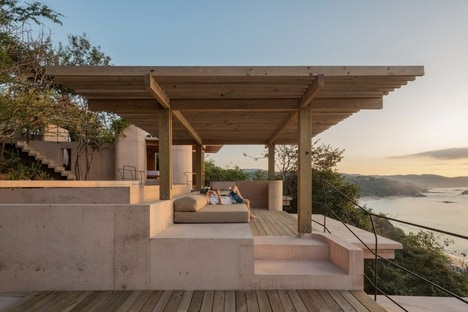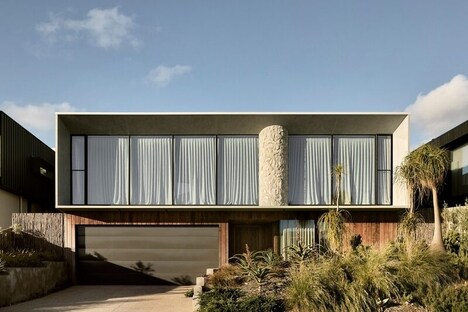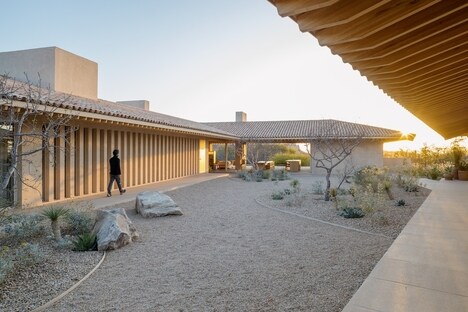
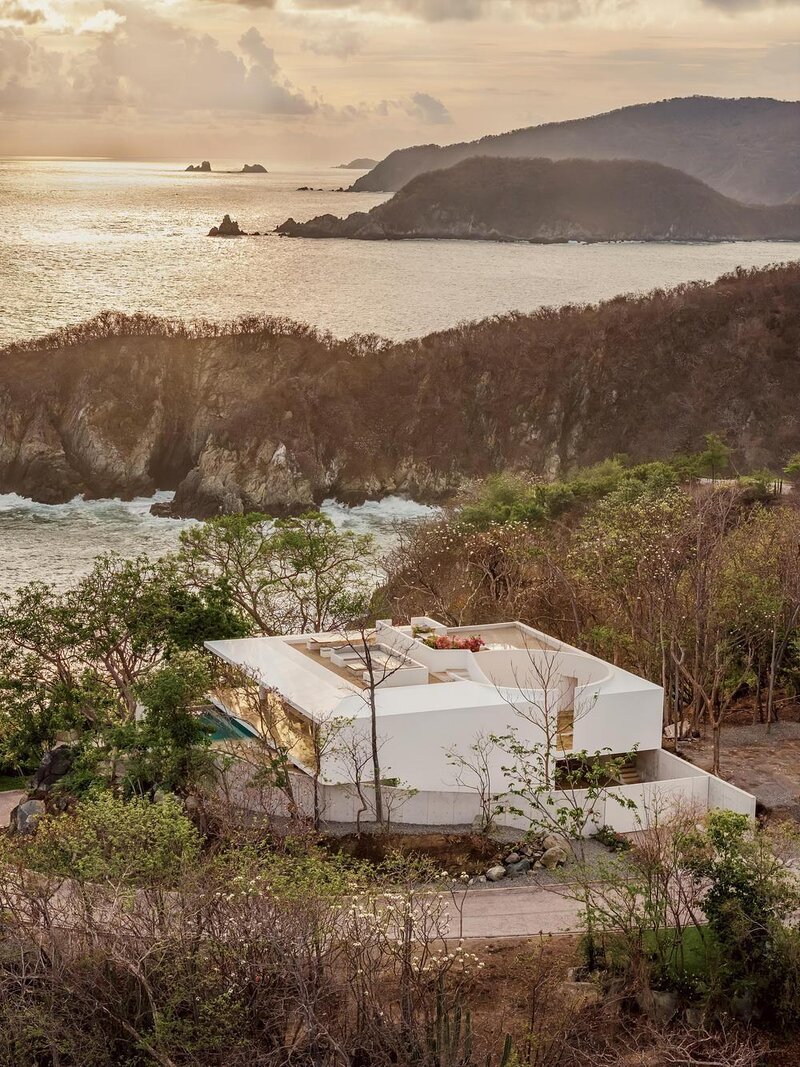
HW Studio's 'Casa Malonic' is a house in Punta Garrobo, Zihuatanejo built around the una enramada idea, reduced to a ground, a roof and a shadow. The design treats inhabiting as being beneath a canopy rather than placing a view inside the house.
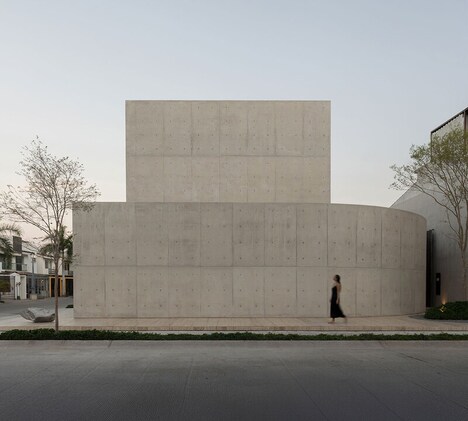
The 497 mts2 residence, completed in June 2026, reads as a contained white mass with a single curved concrete wall that follows the road. A path leads to a circular courtyard that removes built mass and admits sky and trees into the interior. The ground palette evokes beach sand and the white walls reference nine Cacalosúchil trees so the house is first experienced through the feet.
This transition from street to refuge to horizon creates sensory continuity between landscape and architecture and offers shaded, contemplative spaces. For a studio intent on quiet, Casa Malonic shows how pared-back moves can shape a restorative domestic experience.
Image Credit: César Béjar
Key Themes Behind This Trend
- Canopy-centered Living
- Residential concepts that prioritize shade, airflow and overhead shelter over enclosed views signal potential for climate-responsive homes shaped around comfort and sensory refuge.
- Courtyard Void Architecture
- Strategic subtraction of built mass through circular courtyards creates openings for daylight, vegetation and sky, expanding opportunities for restorative spatial experiences in dense or coastal settings.
- Minimal Coastal Materiality
- Pared-back palettes inspired by sand, whitewashed surfaces and native trees point to new forms of luxury where tactile calm and environmental continuity replace decorative excess.
Where This Applies
- Residential Architecture
- High-end housing can be redefined through passive cooling, shaded circulation and landscape-integrated layouts that respond to warmer climates without relying on technological spectacle.
- Hospitality Design
- Boutique resorts and retreat properties may draw from canopy-based planning to create quieter guest experiences centered on shade, thresholds and immersive natural transitions.
- Sustainable Construction
- Low-intervention concrete forms, reduced massing and passive environmental strategies highlight opportunities for building systems that lower energy demands while preserving architectural distinctiveness.