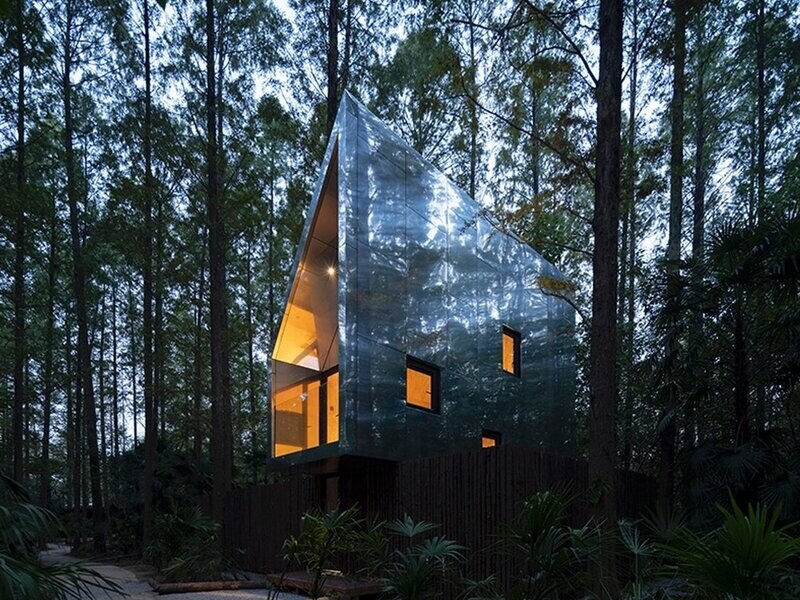
The Secret Camp by Wiki World turns a Wuhan forest into a living art gallery within the metasequoia woodlands of Dongxihu District. Built in collaboration with United Investment Merryda Hotel Management Group, the elevated cabins stand on slender supports that protect the natural terrain below. Each unique structure contributes to the landscape’s character: Time Machine glimmers in silver cladding, Daydream blends into foliage, and Red Windmill adds a bold sculptural presence above the trees.
Constructed from prefabricated glulam timber and carbonized wood panels, the project minimizes environmental impact while maintaining reversibility. Interiors are open and light-filled, connecting guests directly with the surrounding canopy. Pathways weave through untouched forest rather than over it, emphasizing coexistence with nature. Beyond serving as accommodation, Secret Camp doubles as an open-air cultural site where art, architecture, and ecology coexist in perfect balance.
Image Credit: Wiki World
Why This Trend Is Growing
- Eco-friendly Architectural Design
- Innovations in eco-friendly architectural design focus on using renewable materials like glulam timber to reduce environmental impact while blending structures seamlessly into natural settings.
- Multifunctional Living Spaces
- The integration of art and accommodation in treehouse designs exemplifies the trend towards creating multifunctional living spaces that serve as cultural and ecological landmarks.
- Reversible Construction Technology
- Reversible construction technology emphasizes creating structures with materials and methods that allow for easy assembly and disassembly, promoting sustainability and minimal environmental disruption.
Industries Being Reshaped
- Sustainable Tourism
- The sustainable tourism industry is rapidly evolving to include accommodations that prioritize both environmental preservation and immersive guest experiences.
- Urban Forestry Integration
- Urban forestry integration focuses on incorporating natural elements into city planning, providing opportunities for innovative approaches to preserving green spaces within developed areas.
- Luxury Eco-lodging
- Luxury eco-lodging represents a growing sector where comfort meets conservation, with unique offerings like elevated timber treehouses enhancing experiential travel.