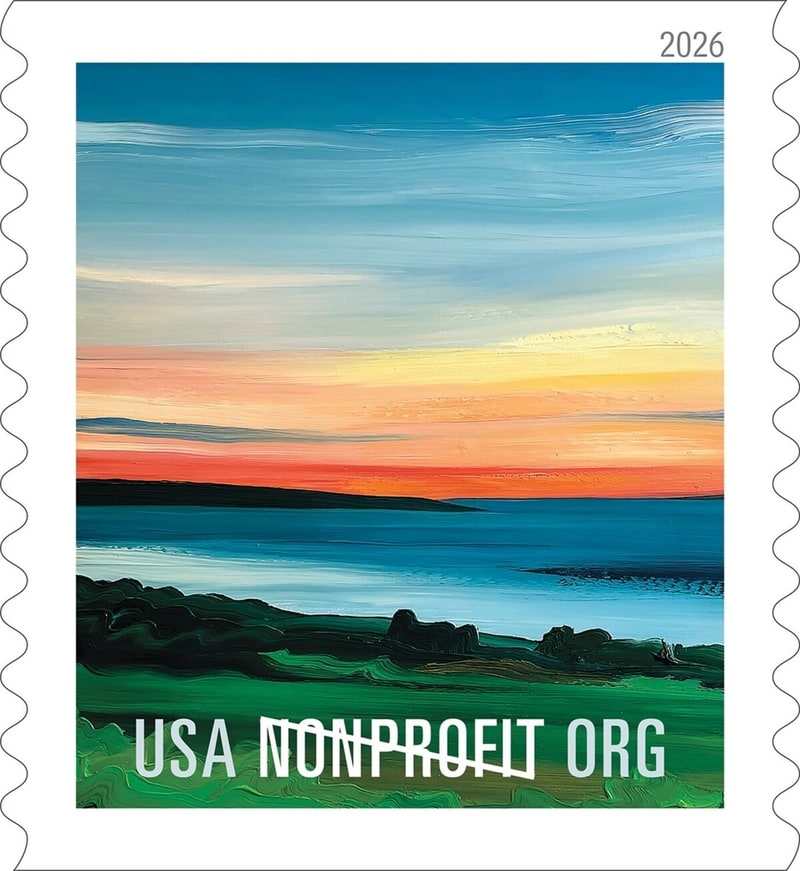
The United States Postal Service has released the Summer Sunset stamp — a new non-denominated, nonprofit-rate postage option specifically designed for bulk mailings by authorized nonprofit organizations.
The design of the Summer Sunset stamp features original oil painting artwork by self-taught Martha's Vineyard artist Rachael Cassiani. The artwork depicts a serene sunset over the fishing village of Menemsha. This stamp, which was issued without a formal ceremony in Edgartown, Massachusetts, portrays a cherished local tradition where summer visitors gather to watch the sun dip below the horizon and spontaneously applaud the spectacle. This moment was recognized by art director Derry Noyes, who discovered it while visiting a gallery on the island and recognized it as an ideal subject for this postal issue.
The Summer Sunset stamp is available for purchase in self-adhesive coils of 3,000 and 10,000 units through various channels.
Image Credit: The United States Postal Service
What's Driving This Trend
- Artful Nonprofit Postage
- Nonprofit-rate stamps with original artwork create space for emotionally resonant direct mail that blends operational savings with elevated donor-facing presentation.
- Localized Mail Design
- Regional imagery tied to recognizable community rituals signals potential for place-based mail products that strengthen identity, nostalgia, and audience relevance.
- High-volume Analog Personalization
- Large self-adhesive stamp coils point to renewed value in scalable physical communications where tactile design differentiates bulk outreach from digital clutter.
Who This Affects Most
- Postal Services
- Postal operators have an opportunity to reframe utilitarian mailing products as design-led media formats that generate cultural appeal and specialized customer segments.
- Nonprofit Fundraising
- Mission-driven organizations benefit from postage options that make large-scale donor communications feel more personal, collectible, and visually memorable.
- Regional Tourism
- Destinations represented through everyday postal artifacts gain low-cost cultural visibility as scenic traditions and local artists travel through national mail networks.