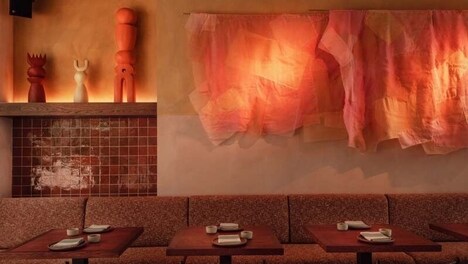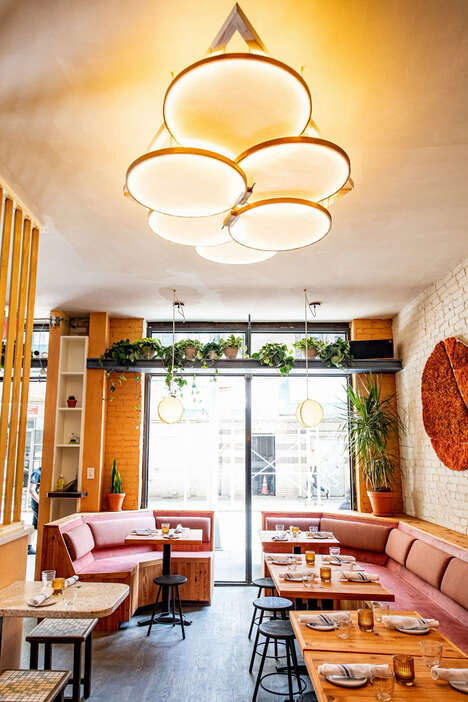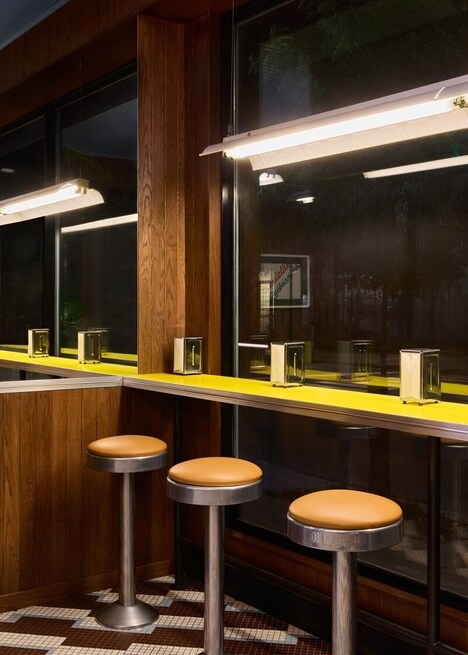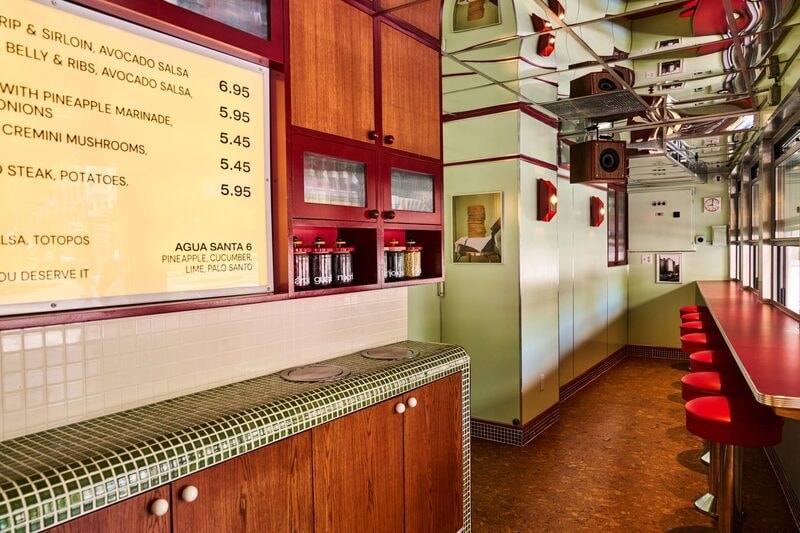
Santo Taco, a compact taqueria in Soho, merges the bold spirit of Mexico City’s taco stands with the nostalgic ease of a New York diner. Designed by local studio Polonsky & Friends, the eatery sits in a slim space beside La Esquina and was launched by Santiago Perez of Cosme fame. The interior features mint green walls trimmed in glossy red lacquer, Formica counters, and circular diner stools, creating a vibrant, graphic aesthetic. Cork flooring and a mirrored stainless-steel ceiling enhance the sense of motion and energy.
The design favors tone over kitsch, aiming for warmth and conviviality. An open kitchen fuels the atmosphere, putting chefs and their five-taco menu front and center. A mosaic-tiled ledge hides waste disposal, while wall shelving, red sconces, and curated artworks lend nostalgic character. Every detail supports the fast, social rhythm of a neighborhood taqueria—flowing effortlessly between function, style, and cultural cross-pollination.
What's Driving This Trend
- Compact Dining Spaces
- The rise of narrow and efficiently designed eateries offers a fresh take on urban dining by maximizing small spaces for memorable dining experiences.
- Cultural Cross-pollination Design
- Merging elements from different cultural aesthetics, such as Mexico City and New York, provides unique dining environments that resonate with diverse clientele.
- Open-kitchen Concepts
- Showcasing the culinary process through open kitchens enhances engagement and transparency, transforming the dining experience into a personalized event.
Who This Affects Most
- Interior Design
- There is growing demand for innovative use of colors and materials in small spaces, paving the way for creative artistry in compact interior design.
- Hospitality
- Adapting traditional culinary experiences for urban settings allows hospitality experts to create vibrant, communal atmospheres in compact forms.
- Restaurant Technology
- The integration of smart waste solutions and space-savvy designs presents opportunities to revolutionize efficiency in restaurant operations.