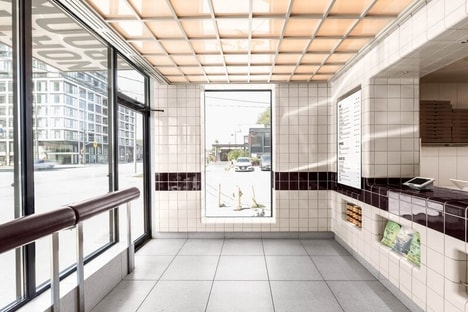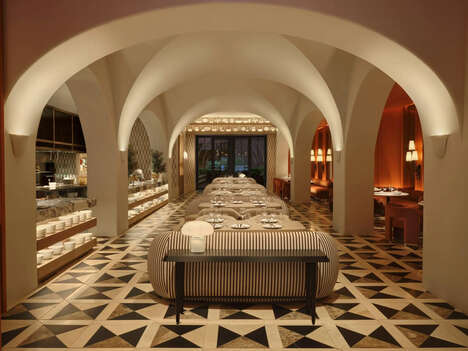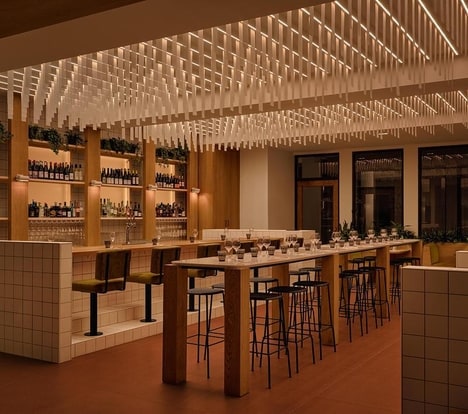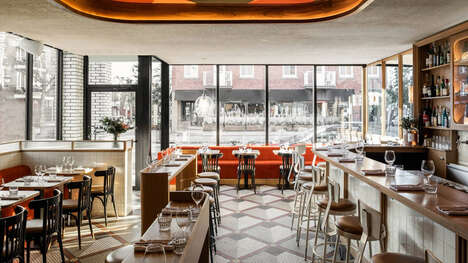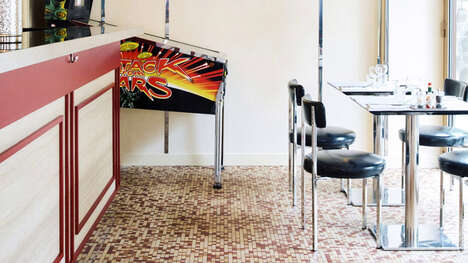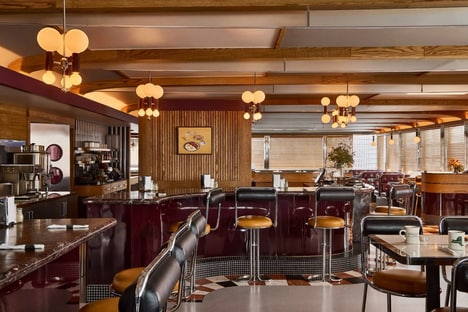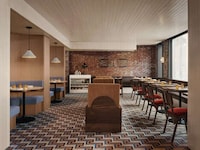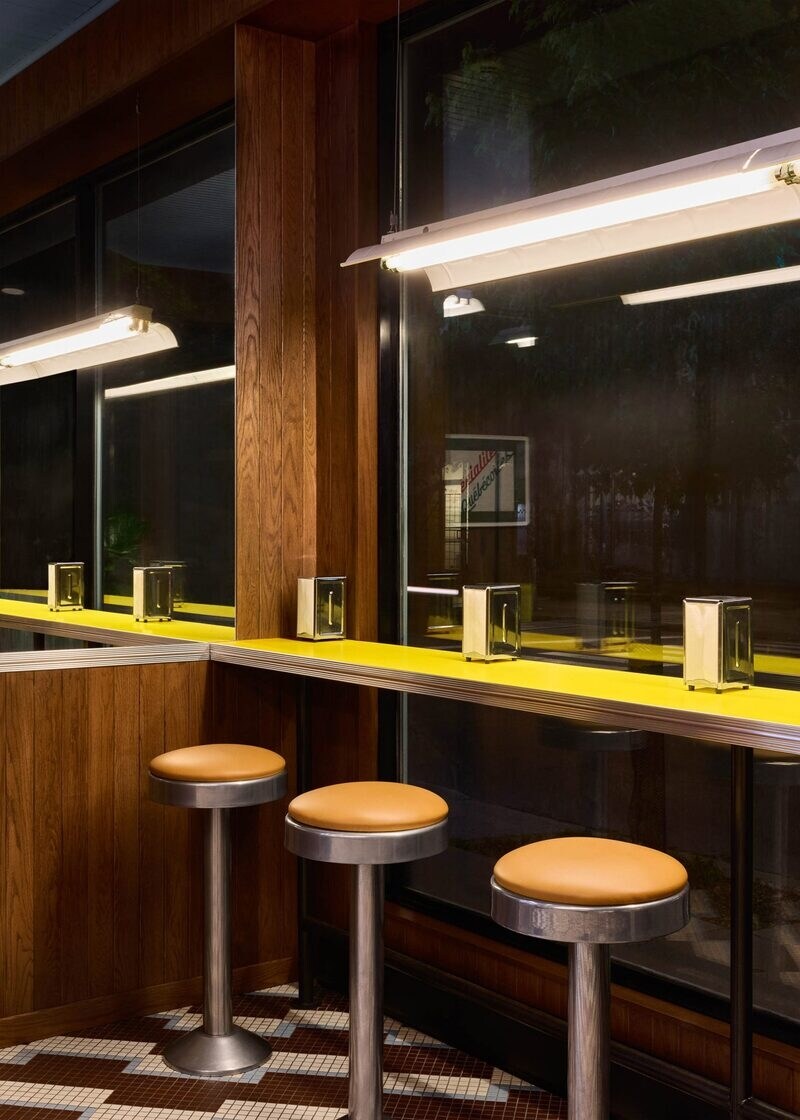
The Renzo sandwich shop, designed by Ménard Dworkind architecture & design (MRDK), offers a nostalgic reinterpretation of North American deli culture in the Mile-End district of Montreal. The interior blends wood-panelled walls, mustard-yellow diner booths and a custom mosaic tile floor in burgundy, beige and blue for a layered take on period design. A pastel blue tongue-and-groove ceiling and chrome-trimmed furniture heighten the retro feel without over-referencing one era.
Details like the open kitchen, standing bar by the window, and integrated retail shelving for craft beverages and local products create a welcoming, multi-use environment. Graphic elements including hand-painted signage and memorabilia, add personality while reinforcing the shop’s neighbourhood roots. The design positions Renzo not simply as a place to eat but as an experience that bridges nostalgia, community and craftsmanship with ease.
Image Credit: Mathieu Lévesque
Why This Trend Is Growing
- Nostalgic Design Revivals
- Incorporating retro aesthetics with a modern twist is transforming traditional spaces into experiential environments that evoke nostalgia.
- Multi-use Spaces
- The integration of diverse functionalities in eateries promotes a versatile customer experience, combining dining with retail and social interaction.
- Community-centric Dining
- Establishments that emphasize local culture and personal connection are redefining the dining experience as a hub for community engagement.
Industries Being Reshaped
- Interior Design
- There's a growing demand for spaces that seamlessly blend historical aesthetics with contemporary functionality in the interior design industry.
- Food and Beverage
- Innovation in the industry focuses on creating unique dining experiences that merge culinary offerings with cultural and nostalgic elements.
- Retail and Hospitality
- The convergence of retail and hospitality within food outlets is driving the development of dynamic, customer-centric environments.