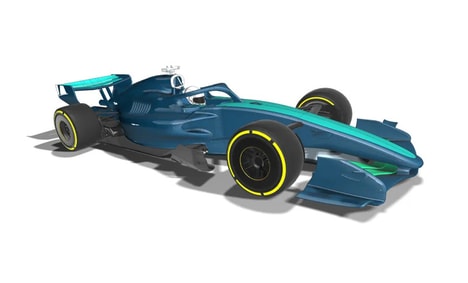
The safe race is one of the top priorities for world-renowned NASCAR. Yet, due to the affiliation of the sport with adrenaline and fast cars, the US league has "experienced an average of more than one death annually since 1950." Deep learning technology is now being employed in this ecosystem to help create a safer environment for the drivers and their teams.
Argo AI/Ford Motor Company is relentlessly working and advancing in the training of a deep learning algorithm that will contribute massively to a safer race. Through artificial intelligence, teams will be efficient in the identification of a car -- a task that proves to be difficult as the vehicles are often changing in their aesthetic make-up from race to race and are also moving at high speed. This efficiency will allow the racing team the "ability to quickly identify and access a car that is experiencing a malfunction during a race."
Image Credit: NVIDIA’s company blog
Why This Trend Is Growing
- Deep Learning Technology in Racing
- Utilizing deep learning technology in racing can help create a safer environment for drivers and teams.
- Artificial Intelligence for Car Identification
- Developing artificial intelligence systems for efficient car identification can help racing teams quickly address malfunctions during races.
- Enhanced Safety Measures in Motorsports
- Implementing advanced safety measures, such as deep learning algorithms, can significantly reduce the number of fatalities in motorsports.
Industries Being Reshaped
- Automotive
- The automotive industry can benefit from integrating deep learning technology to enhance safety features in racing and regular vehicles.
- Artificial Intelligence
- The artificial intelligence industry has opportunities to develop efficient algorithms for car identification in the racing sector.
- Motorsports
- The motorsports industry can leverage innovative safety measures like deep learning technology to ensure safer races and protect drivers.