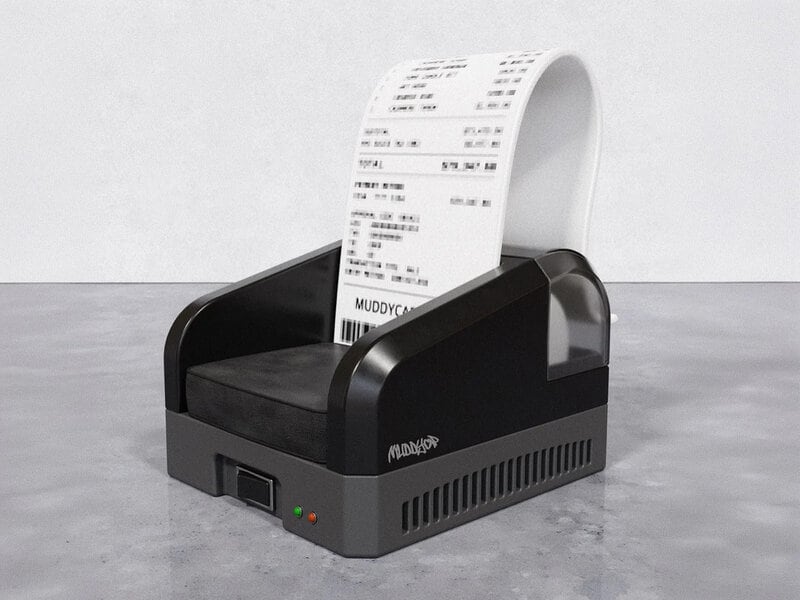
Muddycap's 'Receipt Chair' transforms a thermal receipt printer into an armchair concept, enlarging the checkout device so the printed strip doubles as the chair back. The oversized format lets the receipt curl upward behind the seat, giving the piece a retail fixture's look in furniture form.
A glossy black shell forms the arms, while a smoked panel on one side hints at the paper roll inside. The curled receipt rises to create a reclined backrest, and the charcoal base keeps printer cues such as a rocker switch and red and green LEDs. The piece exists as a 3D render on Muddycap's Instagram.
Its 3D-render status keeps the chair in concept territory, but the receipt-printer body gives furniture and store-design brands a template for seating in checkout or waiting areas. The recognizable shell extends Muddycap's gadget-based chair series to another object people identify at a glance.
Image Credit: Muddycap
Key Themes Behind This Trend
- Object-inspired Furniture
- Everyday devices translated into seating create instantly recognizable design statements that blur product nostalgia with functional interiors.
- Retail Iconography Design
- Checkout cues such as receipts, LEDs, and printer forms offer brands a distinctive visual language for immersive commercial environments.
- Conceptual 3D Furnishings
- Render-first furniture concepts accelerate experimentation with surreal forms before brands commit to physical production or showroom investment.
Where This Applies
- Furniture Design
- Novel interpretations of common machines expand the category with collectible pieces that merge utility, humor, and cultural familiarity.
- Retail Design
- Store fixtures inspired by point-of-sale technology can turn waiting areas and checkout zones into memorable branded experiences.
- Digital Art
- Hyperreal 3D renders give creators a low-barrier format for testing market interest in speculative furniture and object-based design.