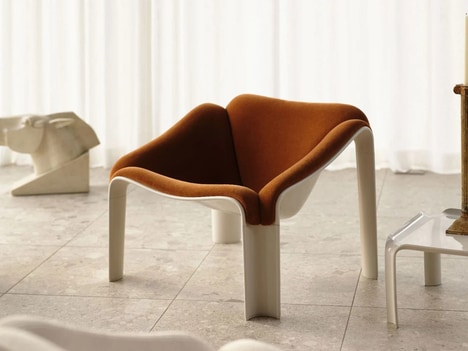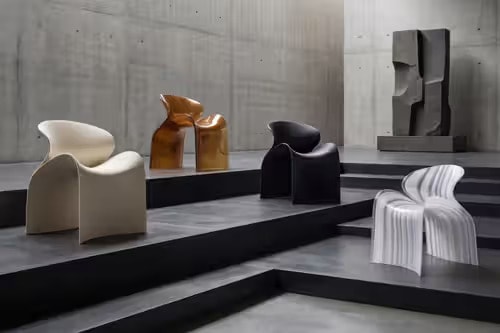
ECHO Chair collection was developed by Zaha Hadid Architects for Nagami using computational design and a continuous-extrusion 3D-printing process that fabricates each chair in a single uninterrupted build. The design is defined by two flowing surfaces that emerge from a shared structural edge, with one forming the seat and base while the other creates the backrest. The collection includes White, Black, Gradient, and Caramel variations, each applying the same geometry through different material finishes and color treatments.
The chairs are manufactured from recovered industrial waste, including recycled polymers sourced from single-use medical plastics. The White and Black models combine rPETG with glass fiber for structural reinforcement, while the Caramel Chair incorporates PETG with a bio-based cork composite. Eliminating the need for separate components or post-production assembly, the fabrication process integrates structure, geometry, and ergonomics into a single form.
Image Credit: Maria Docam Studio
What Makes This Trend Stand Out
- Continuous-extrusion Furniture
- Single-build fabrication enables complex structural furniture forms that reduce assembly labor, component waste, and design constraints in premium interiors.
- Waste-based Materials
- Recovered medical plastics, recycled polymers, and bio-composites point to new material streams that can transform discarded industrial inputs into high-value consumer products.
- Computational Ergonomics
- Algorithm-driven design allows seating to merge comfort, structure, and aesthetics into unified forms that conventional manufacturing would struggle to replicate.
Sectors Adopting This
- Furniture Manufacturing
- Additive production models are reshaping how chairs and interior objects can be produced with fewer parts, localized workflows, and customizable finishes.
- Sustainable Materials
- The use of recycled polymers and bio-based cork composites expands commercial potential for circular materials in durable, design-led applications.
- Architecture and Design
- Advanced digital fabrication gives design studios new pathways to translate experimental geometries into scalable physical products for residential, commercial, and hospitality spaces.