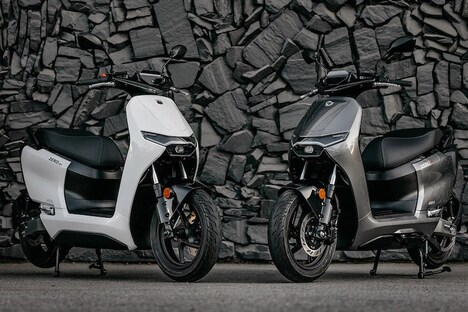
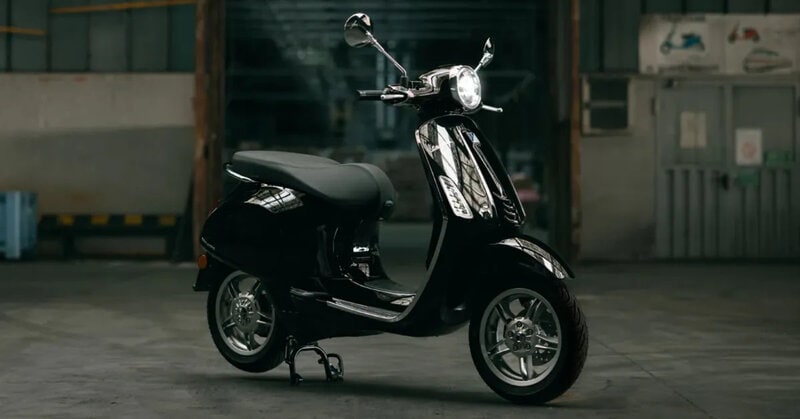
Vespa reworked its 2027 Elettrica scooters around a pull-out battery, making home charging possible for city riders without a garage or fixed parking plug. The updated range also brings in a modular electric motor built in Italy by parent company Piaggio, while leaving the familiar Vespa shell largely unchanged.
In Europe, the Primavera Tech is classified as a motorcycle, while the Primavera and Sprint S stay in the lower-speed urban role. Eco range reaches 85 km on the Primavera and Sprint S, and the charger draws 17% less energy from the wall.
At the outgoing model's $8,299 U.S. price point, the removable battery shifts Vespa's electric story toward day-to-day utility instead of styling alone. That feature makes apartment-friendly charging a stronger reason to consider an electric scooter in dense cities.
Image Credit: Vespa
Key Themes Behind This Trend
- Removable Urban Batteries
- Portable scooter batteries reduce dependence on curbside chargers and create new convenience models for apartment-dwelling commuters.
- Retro Electric Mobility
- Familiar heritage styling paired with electric drivetrains opens space for premium brands to convert design loyalty into low-emission adoption.
- Efficient Home Charging
- Lower wall-energy consumption makes personal electric mobility more practical as operating-cost transparency becomes a stronger purchase factor.
Where This Applies
- Electric Scooters
- Swappable and pull-out battery systems can differentiate urban scooter platforms by solving charging friction in dense residential settings.
- Micromobility
- Apartment-compatible vehicle design expands the addressable market for compact transportation beyond riders with garages or dedicated parking access.
- Urban Transportation
- Motorcycle-class and low-speed electric models create segmented mobility options that align with varied city regulations, commute distances, and rider needs.