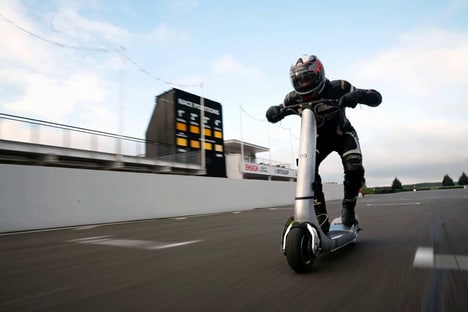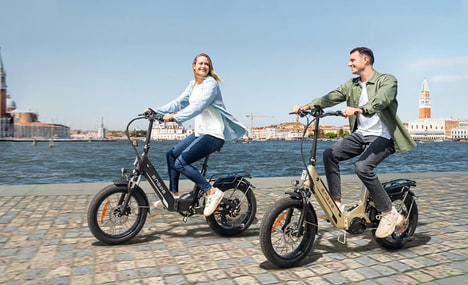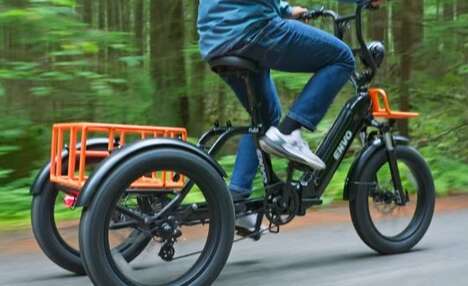
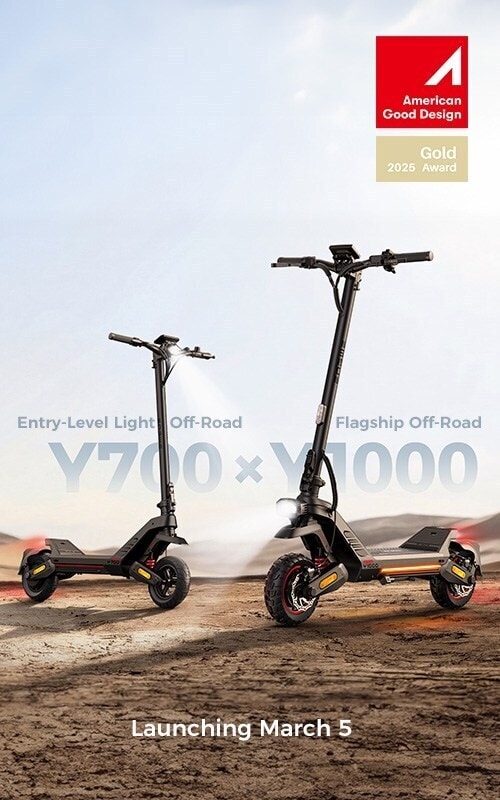
ENGWE has expanded its Y-Series portfolio with the launch of two new performance-driven electric scooters — the Y700 and the Y1000 — which are designed to cater to distinct segments of the personal mobility market, ranging from daily urban commuting to high-performance off-road riding.
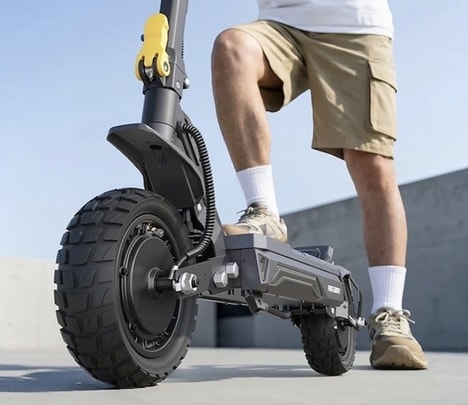
The Y1000 is positioned as the brand's most powerful off-road flagship model, featuring a dual-motor system capable of a peak output of 2400 watts. This model is built around a 52-volt battery that supports a maximum range of up to 100 kilometers on a single charge, and its performance capabilities are complemented by hydraulic disc brakes and a reinforced suspension system to enhance control and stability in demanding conditions. In contrast, the Y700 is engineered as an entry-level off-road scooter focused on structured daily commuting, equipped with a 1200-watt peak motor that offers up to 85 kilometers of range. Its design incorporates a fixed frame for durability and riding stability, along with a dual suspension system to improve comfort and control on typical city roads and uneven pavement.
Both performance-driven electric scooters integrate smart features such as Near Field Communication (NFC) unlocking, Bluetooth-enabled navigation, and cruise control.
Image Credit: ENGWE
What Makes This Trend Stand Out
- High-power Off-road Electric Scooters
- A surge in dual-motor, high-wattage models is enabling rugged, all-terrain e-scooters that redefine personal off-road mobility and performance expectations.
- Extended-range Battery Platforms
- Larger voltage architectures and optimized pack designs are supporting 80–100+ kilometer ranges that shift the use case from short urban trips to longer commuter and recreational journeys.
- Embedded Smart Mobility Features
- Integration of NFC unlocking, Bluetooth navigation and cruise control is transforming scooters into connected devices with seamless user profiles, telematics and service ecosystems.
Sectors Adopting This
- Personal Mobility and Micromobility
- Manufacturers and fleet operators face opportunities to offer tiered products and services spanning urban commuters to performance-oriented riders, reshaping vehicle segmentation and rental models.
- Battery Manufacturing and Energy Storage
- Advances in 52-volt systems and higher-capacity cells create pathways for novel module designs, fast-charging networks and second-life energy solutions that alter supply chains and lifecycle economics.
- Urban Infrastructure and Transportation Planning
- City planners and transit authorities are presented with new demands for charging hubs, off-road-friendly lanes and regulation adjustments to integrate higher-speed, longer-range scooters into multimodal networks.