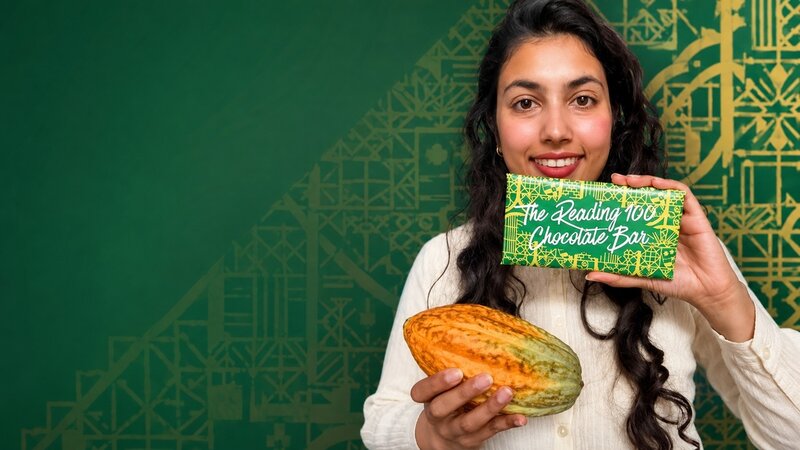
The Reading 100 Chocolate Bar is a confectionery product made entirely from British ingredients as the first-of-its-kind in nearly 100 years to draw attention to the food supply chain.
The chocolate bar was created by food security master's student Maha Khan at the University of Reading, and features cocoa, sugar and milk all sourced from Britain. The bar is considered to be the first chocolate achieved with British-grown cocoa since 1932, when a bar was produced by Rowntree's with cocoa sourced from a glasshouse at its York headquarters. The bar is part of a project that highlights just how vulnerable Britain's confectionery market is, given its £10.4B valuation that's reliant entirely on imported cocoa.
The Reading 100 Chocolate Bar is reported to have a rich flavor, but is limited to just six examples with no plan for large-scale production given constraints.
What's Driving This Trend
- Hyperlocal Ingredient Sourcing
- Regionally grown inputs are reshaping premium food narratives by exposing supply chain dependencies and creating room for provenance-led product differentiation.
- Climate-adapted Cocoa
- Experimental cocoa cultivation in nontraditional markets signals potential for controlled-environment agriculture to reduce reliance on vulnerable equatorial supply chains.
- Food Security Storytelling
- Limited-edition products tied to supply chain research are turning complex agricultural risks into tangible consumer experiences with strong educational and branding value.
Who This Affects Most
- Confectionery
- Chocolate makers face new pressure to diversify ingredient sourcing as cocoa import dependence creates openings for resilient, locally framed alternatives.
- Controlled-environment Agriculture
- Glasshouse and indoor farming systems present emerging possibilities for cultivating high-value tropical crops closer to end markets.
- Sustainable Food Innovation
- Academic and commercial collaborations are accelerating experimental foods that spotlight resource constraints, climate risk and localized production models.