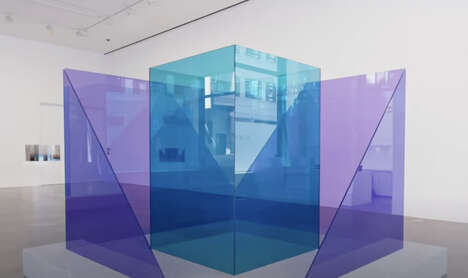
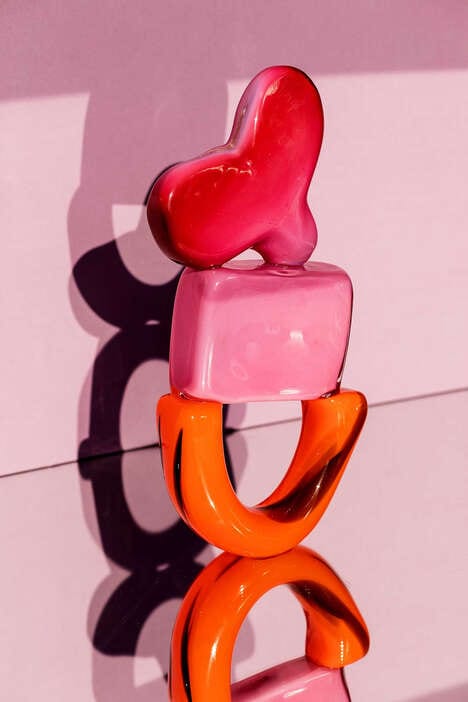
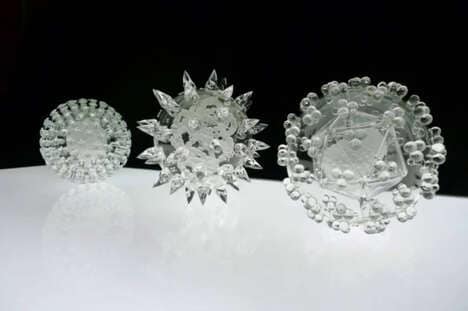
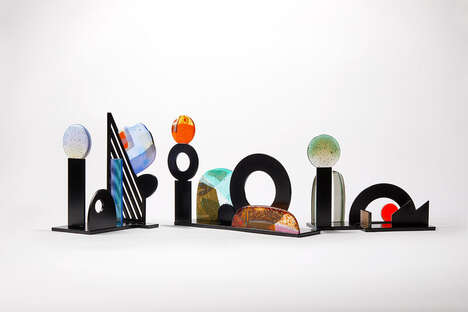
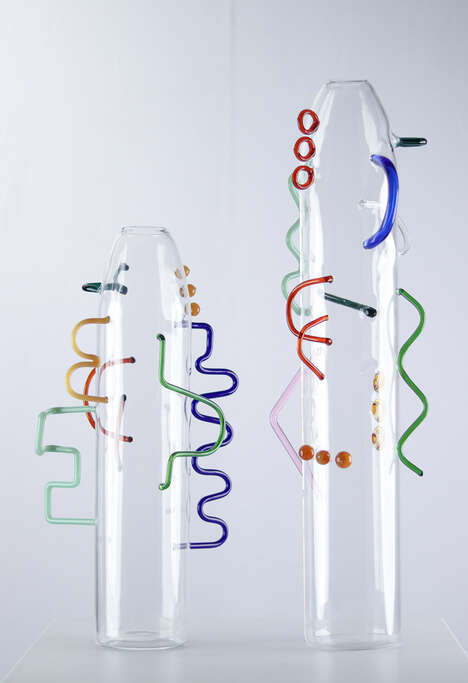
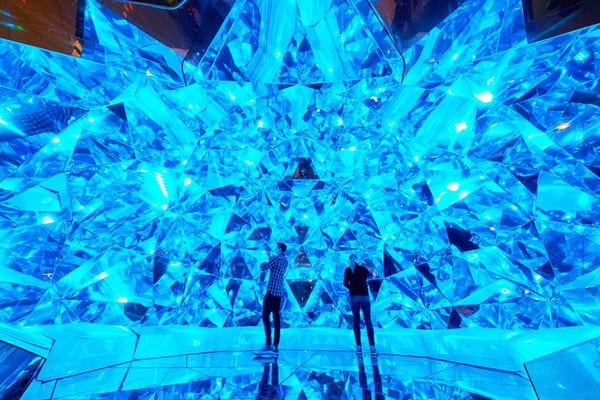
The prismatic glass sculptures of Graham Caldwell will astound people as much as the previous his previous works. But instead of reflecting the world around him with a series of fragmented mirrors, the Florida-based artist has turned his eye towards natural formations that could easily be likened to myopic organisms.
Taking on a range of shapes, the prismatic glass sculptures often focuses on the act of perceiving. He writes, "Much of my work focuses on glass as a conduit or modulating agent for light and its parallel in the functionality of the human eye: using a lens to flip an image of the world, upside down and backwards, into the brain where it is reassembled, through illusion and forensics."
Key Themes Behind This Trend
- Modulating Glass Art
- There's an opportunity for the art world to embrace a more integrated form of art with functionality using glass as a medium.
- Innovative Glass Sculptures
- The introduction of prismatic glass sculptures signals an opportunity for artists to explore more designs around glass sculptures.
- Perception-focused Art
- Opportunities exist for artists to create more art pieces that are centered around perception and its intricacies.
Where This Applies
- Art
- There's an opportunity for artists to explore new designs and creation techniques with glass as a medium.
- Architecture and Design
- The use of prismatic glass in sculptures presents an opportunity for architects and designers to explore the use of glass in their creations.
- Technology
- There's a chance for technology companies to explore the use of prismatic glasses in their products, especially in areas such as virtual and augmented reality.