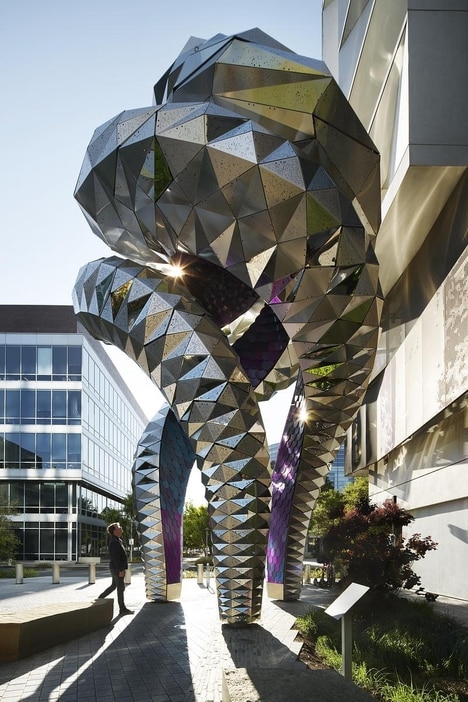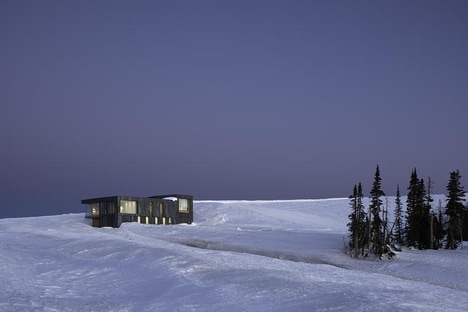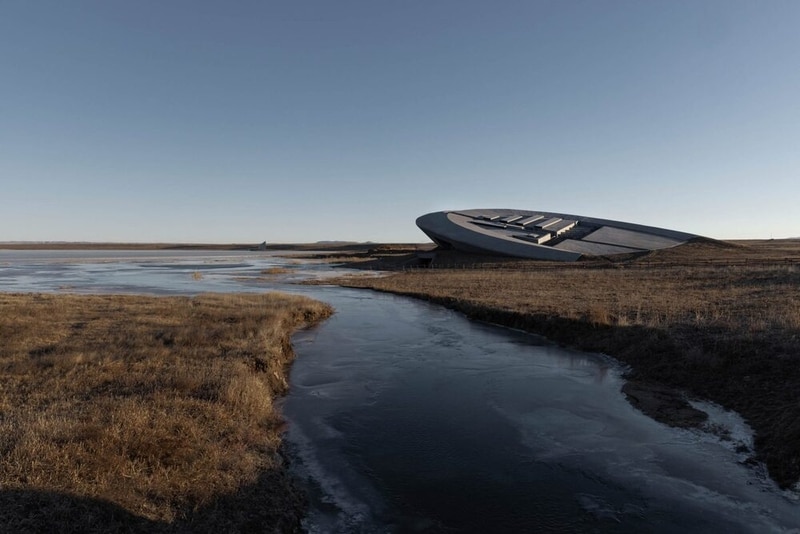
Prairie Ark by Buro Ziyu Zhuang is an architectural installation that reinterprets rural American prairie typologies through fragmented built forms arranged across a landscape-like composition. The project is structured as a series of small architectural elements that resemble shelters, frames, and ruins dispersed across an open site, creating a reading of architecture as scattered memory rather than a single unified building.
The design draws on vernacular prairie architecture, referencing agricultural structures such as barns and utilitarian outbuildings, but abstracts them into simplified geometries and partial enclosures. These elements are positioned to create shifting spatial relationships, where voids and gaps between structures become as important as the built forms themselves. The installation functions as a conceptual landscape where architecture is treated as an archaeological field of dispersed fragments.
Image Credit: Shengliang Su
What Makes This Trend Stand Out
- Fragmented Architectural Memory
- Reframing buildings as dispersed ruins highlights opportunities for reinterpretive preservation models that treat heritage as collectible, relocatable elements.
- Prairie-inspired Modular Shelters
- Abstracted vernacular forms point to modular shelter systems that reconfigure rural typologies into lightweight, reassemblable components.
- Landscape-as-installation Spatialism
- Treating voids and gaps as primary design elements suggests new spatial frameworks where site choreography and sequence replace singular architectural objects.
Sectors Adopting This
- Cultural Heritage Tourism
- Experiential routing through dispersed architectural fragments enables novel interpretive sites that shift visitor focus from monuments to narrative landscapes.
- Prefabricated Housing
- Simplified geometries and partial enclosures create scope for offsite-produced housing modules that prioritize adaptability and contextual assembly.
- Landscape Architecture and Urban Planning
- Composing built fragments across open sites opens possibilities for planning approaches that integrate archaeological sequencing into public realm design.