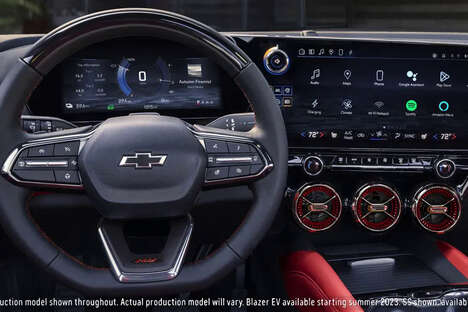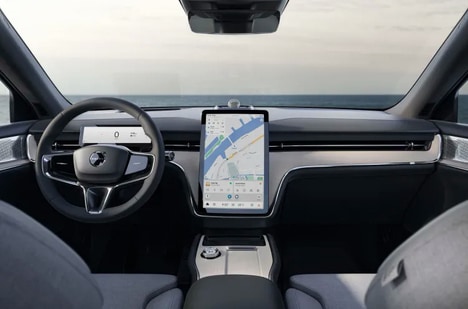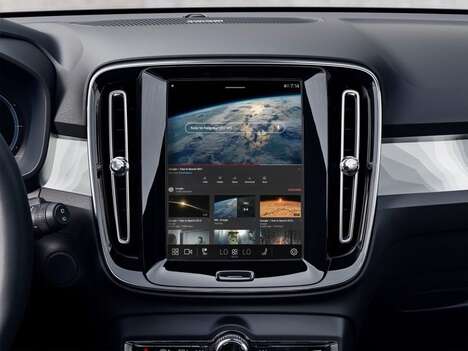
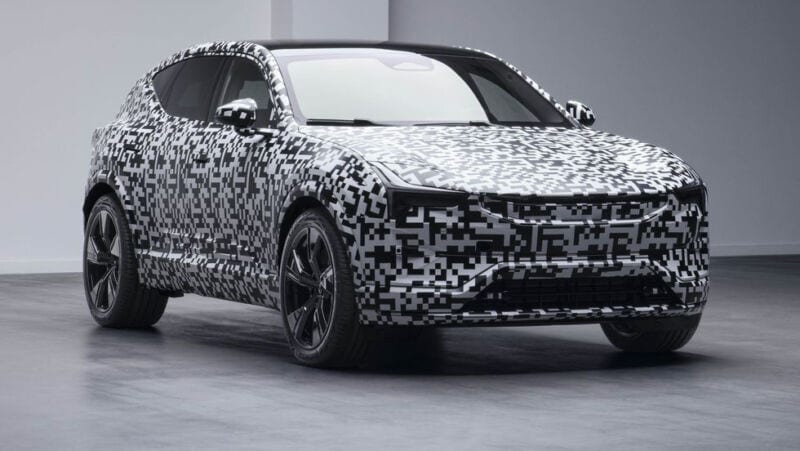
Swedish multinational car manufacturer Volvo has teamed up with Qualcomm and Google to build a smartphone-like infotainment interface for the Polestar 3 -- an all-electric SUV due to launch sometime in 2022.
The new vehicle will come equipped with the brand's new Android Automotive OS, a custom Android infotainment system that can run regardless of whether the driver owns an Android phone. Previously, the Polestar 2 relied on an x86 chip. Whereas the Android Automotive OS utilizes a Qualcomm smartphone chip combined with Google's smartphone OS, dubbed the 'Snapdragon Cockpit Platform Gen 3.'
Some notable features of the new Android set-up include RF capabilities such as Wi-Fi 6, 5G, and more recent Bluetooth, and an improved interface display geared towards multitasking.
Image Credit: Volvo
Key Themes Behind This Trend
- Smartphone-like EV Interfaces
- Car makers partnering with tech companies to develop smartphone-like car interfaces.
- Android Automotive OS
- Increased adoption of Android Automotive OS in all-electric cars.
- Improved Infotainment Systems
- Increasing focus on improving the infotainment system in electric vehicles for better user experience.
Where This Applies
- Automotive
- Car manufacturers partnering with tech giants to develop advanced software for electric cars.
- Technology
- Increased adoption of advanced technologies in all-electric cars.
- Electronics
- Designing and developing advanced electronics for better infotainment system in electric vehicles.