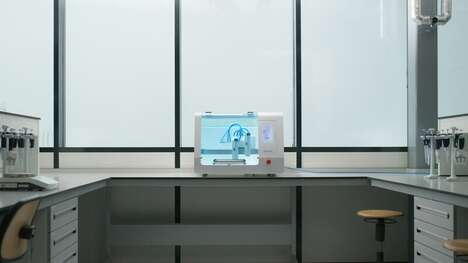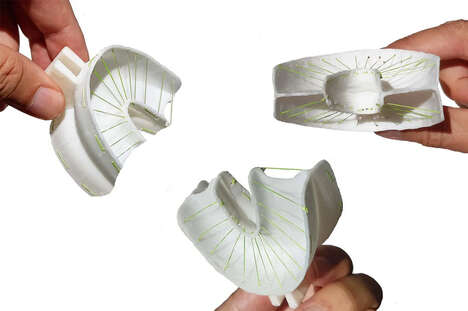


Noted Canadian doctor and humanitarian Tarek Loubani has collaborated with a group of researchers from Western University in Canada to design a highly innovative plastic stethoscope that can be quickly and easily produced anywhere using a simple 3D printed.
Dubbed the Glia, this particular plastic stethoscope can be constructed out of ABS plastic in only three hours and costs only $3 per stethoscope. What's more, the design for the stethoscope was created using open-source software, which means that people around the world can access the designs and use them to build stethoscopes.
With its wonderful combination of low cost and minimal time investment, this plastic stethoscope offers obvious utility in humanitarian contexts, and could be used in emergency departments in war-torn and far-flung countries to enable doctors to make life-saving diagnoses and decisions in minimal time.
What's Driving This Trend
- Low-cost 3D Printing
- The trend of producing low-cost 3D printed medical devices is rapidly increasing due to benefits like easy accessibility and minimal time investment.
- Open-source Hardware
- The trend of creating open-source hardware designs for medical equipment has the potential to save lives and advance medical care in areas with limited resources.
- Medical Equipment Innovation
- The trend of innovation within the medical equipment industry is expanding into the digital realm as developers create cost-efficient hardware solutions to common medical problems.
Who This Affects Most
- 3D Printing
- The 3D printing industry has the potential to disrupt the way the medical industry produces and supplies medical devices such as stethoscopes by providing an end-to-end solution for the manufacturing process.
- Healthcare
- The healthcare industry could benefit from the low cost and accessibility of 3D printed medical devices, such as stethoscopes that can be made and distributed quickly and cheaply in emergencies or under-resourced areas.
- Medical Technology
- The medical technology industry can leverage open-source hardware designs to create more affordable and accessible medical devices that can help improve patient care in places with limited resources.