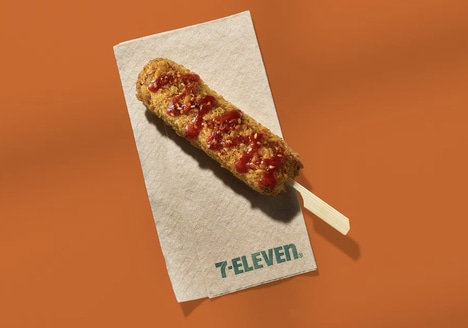
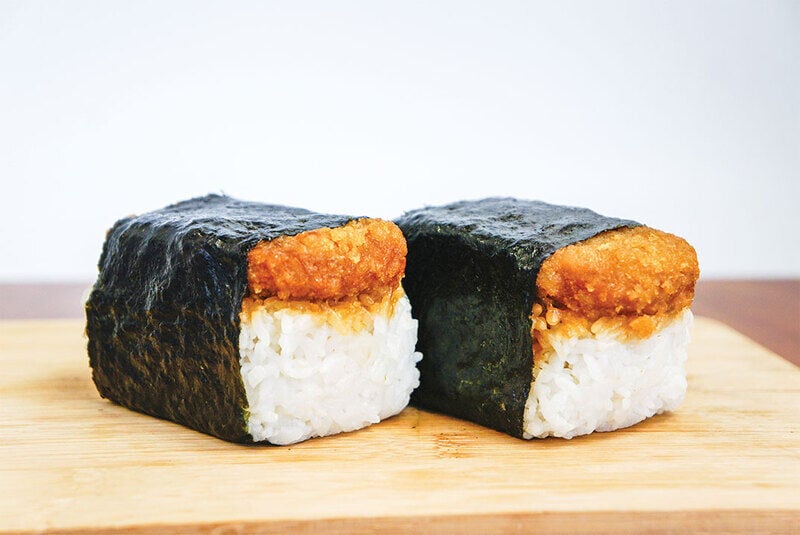
Just in time for summer, 7-Eleven Hawaii has teamed up with OmniFoods to launch a new Plant-Based Katsu Musubi.
For those unfamiliar, Spam Katsu Musubi is a classic Hawaiian snack made with Spam. While the dish is believed to have been created by a Japanese woman living in Hawaii, the dish was popularized by 7-Eleven in the 1990s.
Now 7-Eleven Hawaii is making the snack more accessible to meat-free consumers by launching its first-ever Plant-Based Katsu Musubi. To create the vegan-friendly version of the dish, the convenience store brand teamed up with OmniFoods and leverage the brand's plant-based luncheon meat. This Spam-like product is made from soy, pea rice, and mushrooms so it looks very similar to the luncheon meat. As Debbie Lee Soon, 7-Eleven Hawaii’s Food Innovation and Development Manager explains, "This new addition to our menu allows us to continue our commitment to innovation while also accommodating the growing demand for plant-based alternatives."
Image Credit: 7-Eleven Hawaii
Key Themes Behind This Trend
- Plant-based Snacks
- Creating vegan-friendly versions of classic snacks to cater to the growing demand for plant-based alternatives.
- Convenience Store Innovations
- Partnering with plant-based brands to introduce innovative products into their convenience store menus.
- Meat-free Convenience Foods
- Developing plant-based luncheon meat alternatives to provide meat-free options for convenience store customers.
Where This Applies
- Plant-based Food
- The plant-based food industry can explore creating vegan alternatives for popular meat-based snacks.
- Convenience Store
- Convenience store chains can collaborate with plant-based brands to offer innovative and diverse food options.
- Food Manufacturing
- Food manufacturers can focus on developing plant-based luncheon meat alternatives to cater to the demand for meat-free convenience foods.