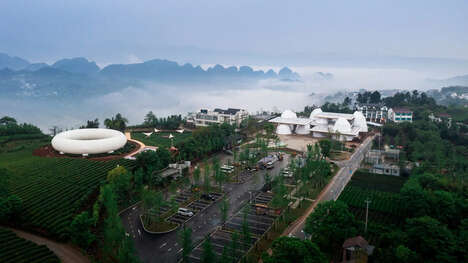
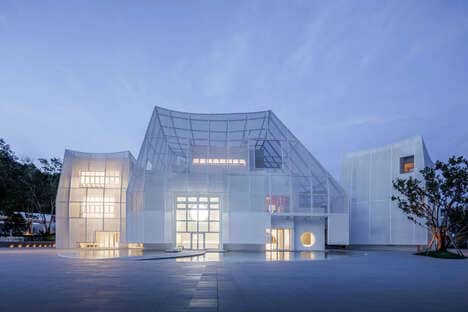
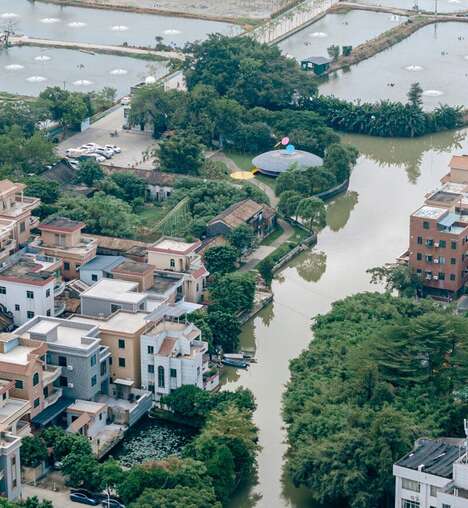
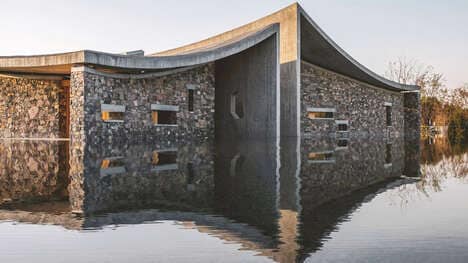
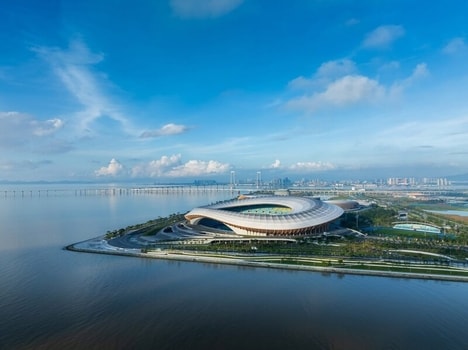
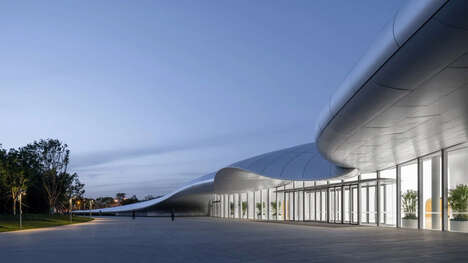
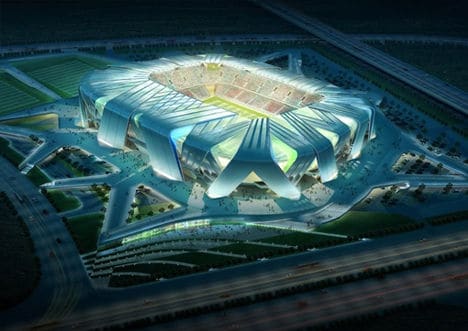
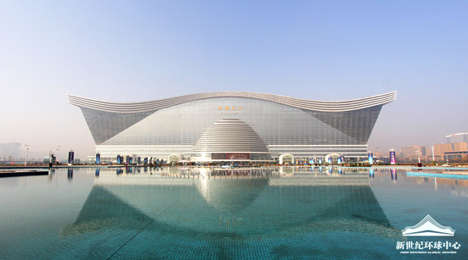
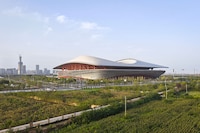
With the recent rapid growth and urbanization happening in China spurred by the 2008 Olympics, it's clear that things have not slowed down yet; the latest architecture project, Phoenix International Media Center, has met its halfway mark in construction. The project, which will be completed in 2012, is as impressive a structure as the Universaide Sports Center or even Herzog and De Meuron’s Bird’s Nest Olympic Stadium. Funnily enough, the Phoenix International Media Center is not actually a stadium, even though it looks like one.
Designed by BIAD UFo, a firm based in China, the Phoenix International Media Center is actually being built for a powerful and large satellite TV provider. Reminiscent of a sea sponge or jellyfish, its netted donut shape is also rather futuristic.
What's Driving This Trend
- Rapid Growth of Urbanization
- New opportunities exist for architects to pioneer structures in megacities like Shanghai and Beijing to accommodate the rapid growth of urbanization.
- Futuristic Architecture
- There is a growing trend towards futuristic architecture and designs, creating ample opportunities for architects to embrace inspiration from nature and experiment with novel constructions.
- Media Spaces
- Media companies around the world are increasingly looking to design and build visually compelling spaces with innovative architecture to accommodate their large and diverse teams, and to make their offices a distinct and visually appealing part of their brand.
Who This Affects Most
- Architecture
- Architecture and construction firms have immense opportunities in megacities like Shanghai and Beijing, where rapid urbanization and growth means the need for new and innovative buildings and structures.
- Media and Entertainment
- Media companies worldwide can explore innovative ideas for their offices, studios, and event spaces, creating uniquely recognizable visual landmarks and environments for their talent and audiences.
- Tourism
- Innovative and futuristic architecture that captures the imagination of visitors and tourists has the potential to boost tourism in high-growth areas like Beijing and Shanghai, bringing significant benefits to local economies.