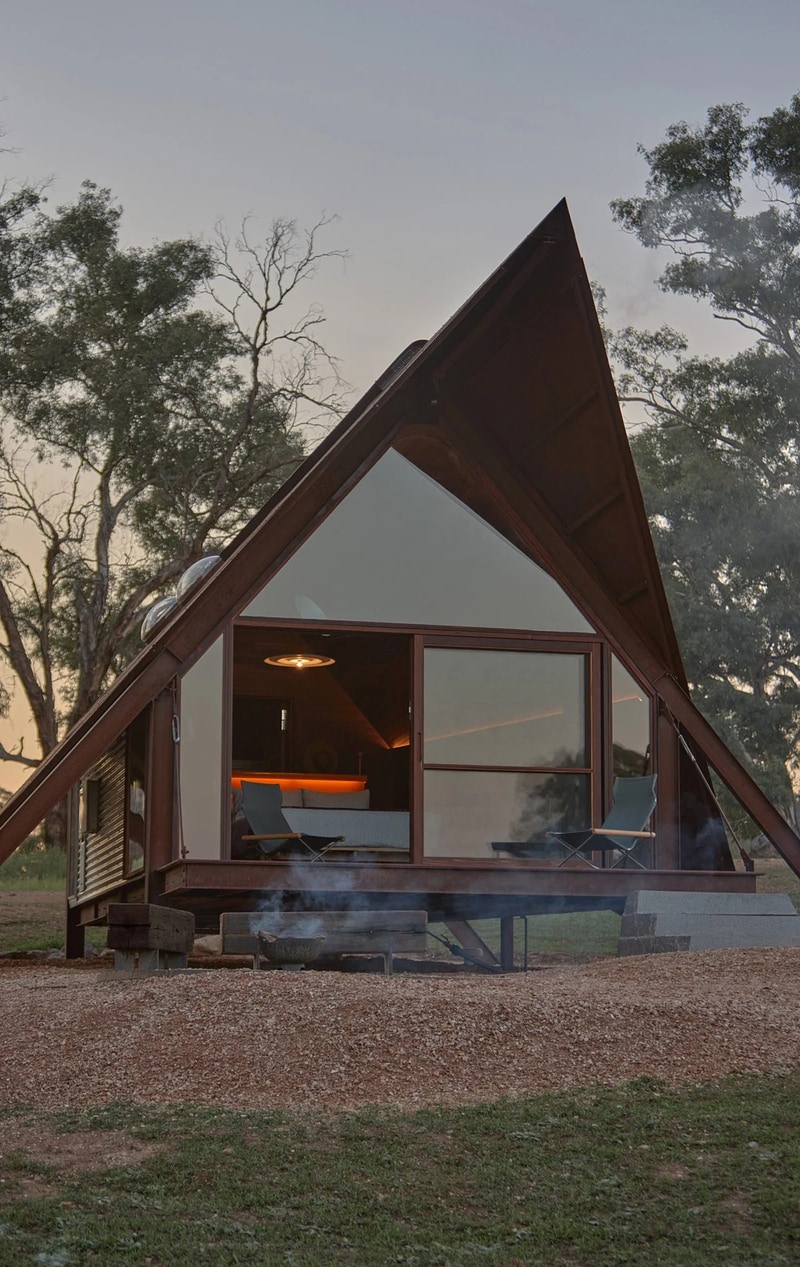
The Permanent Camping III consists of two A-frame steel cabins on a working sheep farm near Orange, New South Wales. The project is the third entry in Casey Brown Architecture's Permanent Camping series. The cabins serve as short-stay boutique accommodation. Their angular steel forms reference the appearance of pitched tents. The structures sit lightly on the surrounding landscape and respond to local climate and site conditions.
The cabins have steel exteriors and interiors lined with oiled recycled ironbark boards. Bespoke brass lighting and custom steel details complete the interior palette. The project provides essential amenities for comfort and encourages direct engagement with the surrounding environment. Permanent Camping III follows earlier projects in Mudgee and Berry. The accommodation is located approximately ten minutes from the regional centre of Orange.
Image Credit: Casey Brown Architecture
What's Driving This Trend
- Architectural Glamping
- Boutique cabins with sculptural forms and premium finishes are turning outdoor stays into design-led experiences that blur the line between camping and luxury hospitality.
- Light-touch Lodging
- Low-impact accommodations that sit lightly on rural landscapes create room for climate-responsive retreats with smaller footprints and stronger place-based appeal.
- Farmstay Micro-retreats
- Working farms are becoming differentiated short-stay destinations as compact cabins add new revenue potential while preserving the authenticity of agricultural settings.
Who This Affects Most
- Boutique Hospitality
- Small-scale accommodations in regional locations are reshaping guest expectations through highly curated interiors, privacy, and immersive access to nature.
- Sustainable Architecture
- Climate-sensitive cabins using durable materials and recycled finishes point to new models for environmentally conscious destination design.
- Agritourism
- Rural properties with underused land are gaining fresh commercial relevance as experiential lodging connects travelers with landscapes, local production, and regional culture.