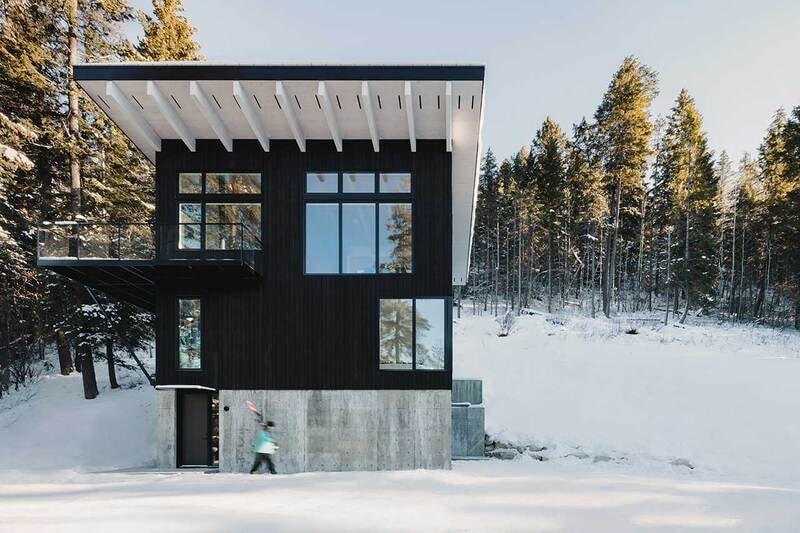
Columbia River Valley Lookout lifts living spaces above the trees by positioning a three-storey structure on a concrete base that raises the main volume into the forest canopy. Twobytwo Architecture Studio designed the cabin in Golden, British Columbia, with blackened timber cladding, large glazing and a steel cantilevered balcony that faces mountain and river views. The layout uses tall ceilings and a restrained material palette of polished concrete, white walls and timber soffits to keep interior sightlines open while maintaining a sense of warmth. The elevated structure minimizes ground disturbance and uses its height to frame long-distance vistas throughout the living areas.
The project relies on a clear structural hierarchy, with the heavy base supporting a lighter upper volume shaped by a simple shed-style roof. The interior planning emphasizes connection to the landscape while maintaining privacy and protection from the terrain below. The resulting cabin blends engineered stability with a compact vertical footprint designed around its surrounding environment.
Image Credit: Twobytwo Architecture Studio
What Makes This Trend Stand Out
- Sustainable Elevated Living Spaces
- Innovations focusing on elevated cabins can provide eco-friendly living solutions that minimize environmental impact by reducing ground disturbance.
- Nature-integrated Architecture
- There is a growing trend towards designs that seamlessly integrate living spaces with natural landscapes, offering immersive experiences without sacrificing modern comforts.
- Minimalist Design Aesthetics
- The use of minimalist aesthetics in cabin designs, such as simple material palettes and clean lines, creates harmonious interactions between man-made structures and their natural surroundings.
Sectors Adopting This
- Eco-friendly Construction
- The eco-friendly construction industry can benefit from innovative materials and methods that reduce foundation impact and enhance the sustainability of elevated structures.
- Tourism and Hospitality
- The tourism and hospitality sector can capitalize on demand for unique, scenic accommodations by incorporating elevated and integrative architectural designs in remote or natural settings.
- Prefabricated Housing
- The prefabricated housing industry has opportunities to develop modular, elevated living units that can be rapidly deployed in various ecological contexts with minimal environmental disturbance.