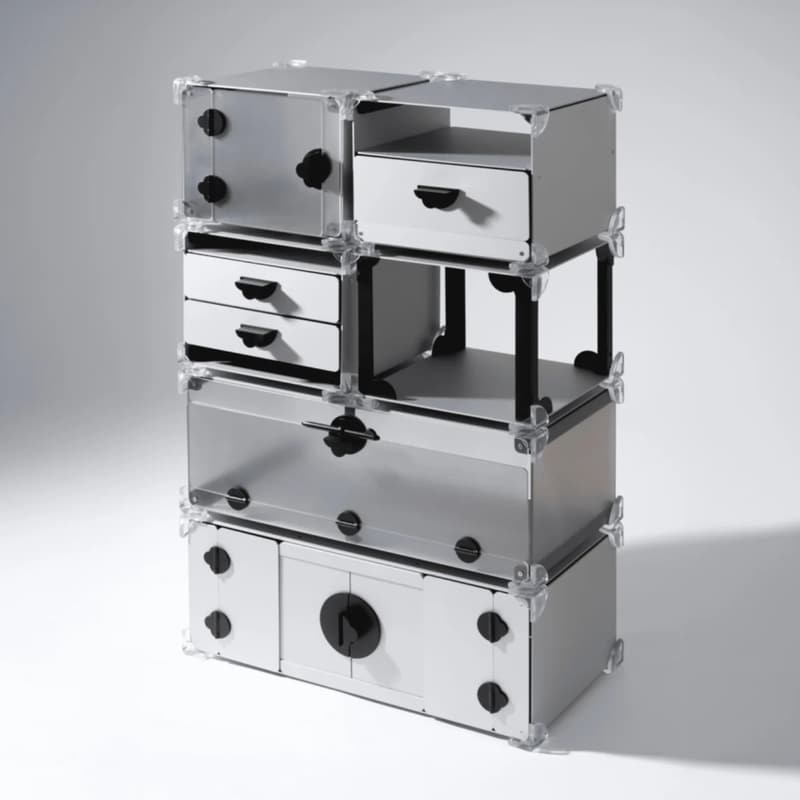
ænd is a modular furniture system created by Korean designer Kim Gayoung. The student project reinterprets the traditional Korean Bandaji as an adaptable storage solution instead of replicating its historic form. A corner module abstracts the Bandaji's decorative hinge into a structural connector that allows individual units to stack, expand vertically, or extend horizontally. The system received a Student Notable distinction in the 2026 Design Awards' Furniture and Lighting category.
The sleek furniture includes translucent and opaque panels that offer different levels of visibility for stored items. The modular format adapts to changing interiors and growing storage needs. Kim developed the project by studying the Bandaji's construction, proportions, and cultural significance rather than its appearance alone.
Image Credit: Kim Gayoung
What's Driving This Trend
- Heritage-inspired Modularity
- Traditional craft references are becoming flexible product systems that blend cultural storytelling with scalable, contemporary interior functionality.
- Adaptive Storage Furniture
- Modular storage formats are reshaping home organization through expandable units that respond to smaller spaces, changing lifestyles, and longer product lifecycles.
- Translucent Display Design
- Semi-visible panels introduce a middle ground between concealment and exhibition, creating new value in furniture that functions as both storage and visual merchandising.
Who This Affects Most
- Furniture Design
- Cultural reinterpretation and modular engineering are opening premium categories for storage products that feel personalized, collectible, and space-efficient.
- Interior Design
- Flexible furniture systems support interiors that evolve over time, reducing renovation friction while enabling more dynamic residential and hospitality layouts.
- Home Organization
- Expandable storage solutions with aesthetic transparency are elevating organization from utility-focused products into design-led systems for modern living environments.