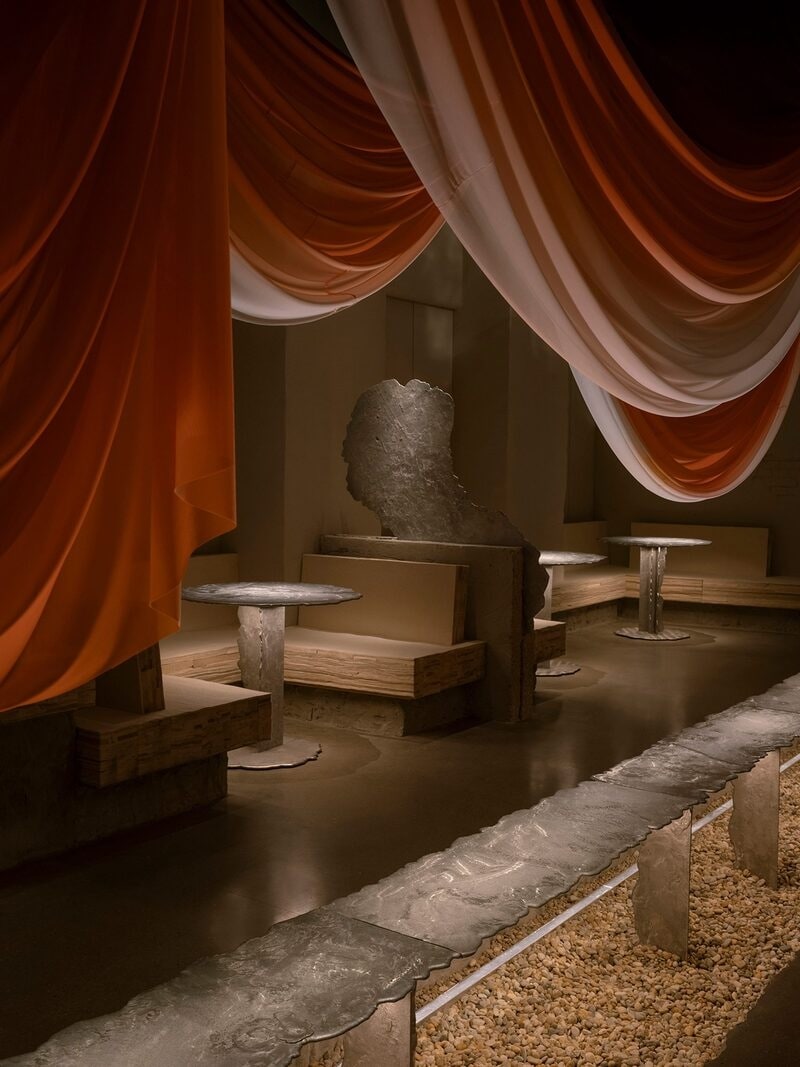
The Onyx Aether restaurant creates an immersive dining environment built around reclaimed materials and a multi-layered spatial approach. The designers preserved the raw shell of the space and introduced new elements made from surplus wool, melted aluminium waste and natural resins that bind the textures together. The seating system uses stacked felt layers inspired by geological formations, while the cast aluminium pieces add sculptural presence without relying on traditional moulds. The contrast between rough existing surfaces and refined new components forms a setting that feels both grounded and experimental.
The layout centres on a sunken communal table surrounded by bespoke seating and a textile installation that moves gently with light and sound. These sensory elements guide guests through the experience while maintaining focus on material tactility. The project demonstrates how sustainability can shape a high end interior through careful sourcing and expressive use of waste materials. The result blends atmosphere, craft and narrative into a dining space that feels contemporary yet rooted in local resources and thoughtful reuse.
Image Credit: URBA
Why This Trend Is Growing
- Sustainable Material Innovation
- Innovations in using reclaimed and waste materials, such as surplus wool and melted aluminium, showcase the potential for high-end interior designs that prioritize sustainability.
- Sensory Design Integration
- Design strategies incorporating tactile, light, and sound elements redefine user interaction, creating immersive experiences that engage multiple senses.
- Geological Design Inspiration
- Architectural and interior designs drawing inspiration from natural geological formations, like stacked felt layers, offer unique aesthetic and functional innovations.
Industries Being Reshaped
- Hospitality Interior Design
- The hospitality industry explores disruptive approaches by integrating sustainable and immersive design concepts, reshaping dining experiences.
- Upcycled Material Manufacturing
- Emerging businesses focused on upcycling wastes such as aluminium and natural resins open new avenues for sustainable material sourcing.
- Experiential Dining Environments
- Restaurants and cafes increasingly incorporate sensory and thematic designs, providing patrons with unique and memorable dining experiences.