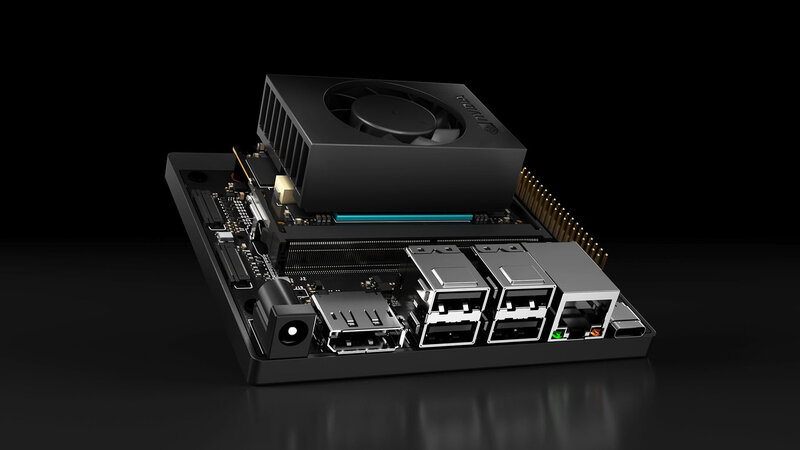
Lunar Outpost announced that its next moon rover will use Nvidia Jetson chips for GPU-powered local processing, supporting the vehicle’s lidar and autonomy systems. The company plans to compare the Jetson platform with its flight-proven computing hardware to evaluate the benefits and limitations of more capable AI processing in the lunar environment.
The rover will travel aboard an Intuitive Machines lander and carry scientific sensors into craters and other terrain that is difficult to examine from orbit. A later mission is expected to explore Reiner Gamma, a lunar region known for its magnetic anomaly. Engineers are focusing on power efficiency, radiation exposure and extreme temperature changes when adapting Jetson hardware for surface operations.
For researchers and space operators, onboard GPU processing could enable faster sensor interpretation and more autonomous decision-making without relying entirely on delayed Earth communications. If successful, the project could advance edge AI systems designed for extreme environments and sustained off-world exploration.
Image Credit: Lunar Outpost
Why This Trend Is Growing
- Edge-AI Space Robotics
- Onboard GPU processing enables rovers to interpret sensor data locally, creating openings for autonomous exploration systems that operate despite communication delays and harsh terrain.
- Radiation-resilient Computing
- Adapting commercial AI chips for lunar radiation, temperature swings and power limits points to new demand for ruggedized processors built for extreme environments.
- Autonomous Lunar Mapping
- Lidar-supported autonomy can improve crater navigation and surface analysis, expanding possibilities for high-resolution lunar mapping beyond what orbital observation can provide.
Industries Being Reshaped
- Space Technology
- GPU-enabled rover platforms signal a shift toward smarter spacecraft and surface vehicles capable of handling complex mission tasks with less Earth-based control.
- Semiconductors
- The use of Nvidia Jetson hardware in lunar missions highlights a growing market for efficient AI chips that bridge commercial performance and space-grade reliability.
- Robotics
- Extreme-environment rover development creates pathways for autonomous robotic systems that can translate space-tested navigation and perception capabilities into terrestrial applications.