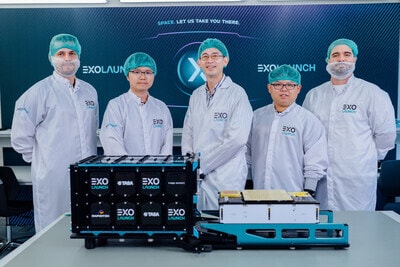

Starcloud, a startup based in Redmond, Washington, has raised $170 million to grow its orbital data center program, funding future satellites and prototypes with onboard GPUs and deployable radiators. The company has already launched 'Starcloud-1,' a 60 kg craft equipped with an Nvidia H100 GPU, and used it to train 'NanoGPT' and operate a version of Gemini, showcasing computing capabilities in low Earth orbit.
The Series A will fund 'Starcloud-2,' which launches in October 2026. It will include multiple GPUs, such as an Nvidia Blackwell chip, an AWS server blade, a bitcoin miner, and the largest deployable radiator flown by a private satellite. Funding also supports Starcloud-3, a 200 kW, three-tonne design meant to use SpaceX Starship’s pez-dispenser deployment system.
For consumers and cloud customers, orbital compute offers abundant solar power and passive cooling, which could reduce operating costs and enhance edge capabilities if launch economics become more favorable. Starcloud’s milestones demonstrate how space-based infrastructure is progressing from experimentation to commercially viable distributed computing.
Image Credit: Shuttershock/Artsiom P
What's Driving This Trend
- Orbital Edge Computing
- Abundant solar energy and low-temperature environments in low Earth orbit enable near-data processing that could dramatically lower latency and shift workloads away from terrestrial data centers.
- Space-based Thermal Management
- Deployable radiators and passive cooling architectures in orbit present opportunities to host high-density GPUs with thermal profiles that are impossible to sustain on Earth.
- Modular Satellite Compute Payloads
- Multi-GPU stacks, server blades, and specialized modules like crypto miners integrated into modular spacecraft designs suggest a plug-and-play model for rapidly upgrading orbital compute capacity.
Who This Affects Most
- Cloud Computing
- Cloud providers could be transformed by offloading energy-intensive training and inference tasks to orbital platforms that offer cost and performance advantages under favorable launch economics.
- Semiconductor Manufacturing
- Chips and systems designed for radiation tolerance, thermal extremes, and modular integration may become a distinct product category serving the needs of space-deployed high-performance computing.
- Space Launch and Logistics
- Launch providers and in-orbit deployment services could see demand for frequent, high-mass deliveries and precise placement of modular data center components to enable scalable orbital infrastructures.